
Women’s Lower Body Shaping Workout
This plan targets the glutes, quads, hamstrings, and calves. It uses a combination of bodyweight and equipment-based exercises to create an effective lower-body routine. Perform this workout 2-3 times a week.
Lower Body Workout for Women
6 exercises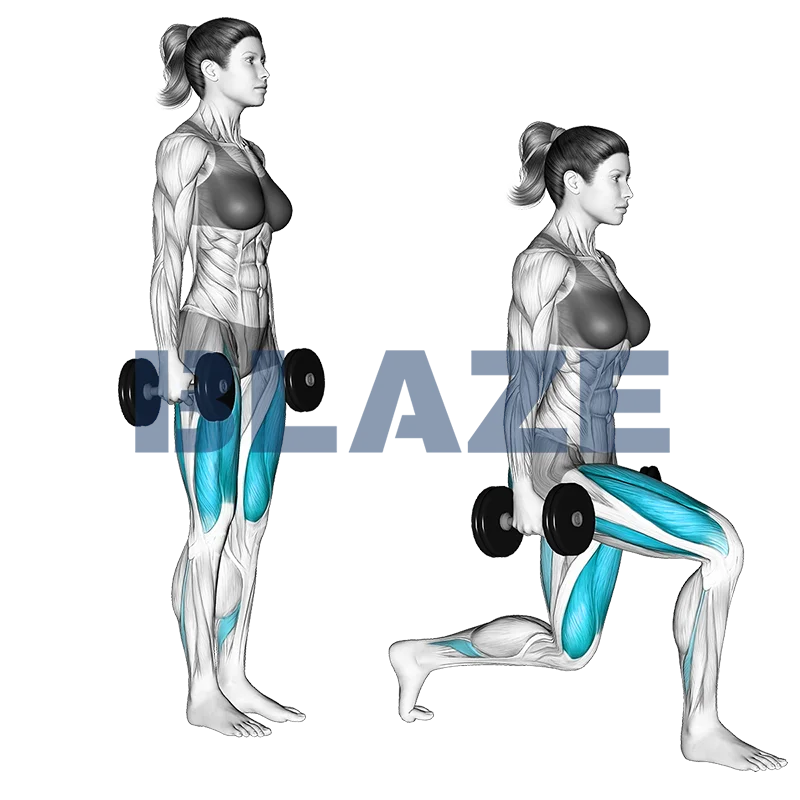
The dumbbell split squat is a powerful unilateral exercise that targets the quads, glutes, and hamstrings. This move also engages the core, enhancing stability and balance. Athletes benefit from improved lower body strength, symmetry, and injury prevention. The unilateral nature of the split squat helps correct muscle imbalances and enhances coordination. By incorporating this exercise into their routine, athletes can enhance their performance in sports requiring leg strength, agility, and power.
Community Averages
25kg
Avg. weight
56lbs
Avg. weight
* Based on data from the Blaze community
Description
- 1Hold a dumbbell in each hand and stand upright with the dumbbells hanging by your sides.
- 2Inhale as you take a large step forward with one leg and bend the knee of that leg until there is a 90 degree angle between your thigh and your calf. The knee of your other (back) leg should almost touch the floor.
- 3Exhale as you drive back up with your front leg and step back into the standing position.
- 4You have completed your first repetition.
- 5Repeat the same motion with your opposite leg. Keep alternating the leg with each lunge.
Tips & Tricks
- •Maintain Proper Posture: Keep your upper body straight, with shoulders back and relaxed, and chin up. Picking a point to focus on in front of you can help you maintain balance.
- •Engage Your Core: Engage your core muscles throughout the movement to maintain stability and support your lower back.
- •Focus on Form, Not Speed: Perform the exercise slowly and with control rather than rushing through it. This ensures proper muscle engagement and reduces the risk of injury.
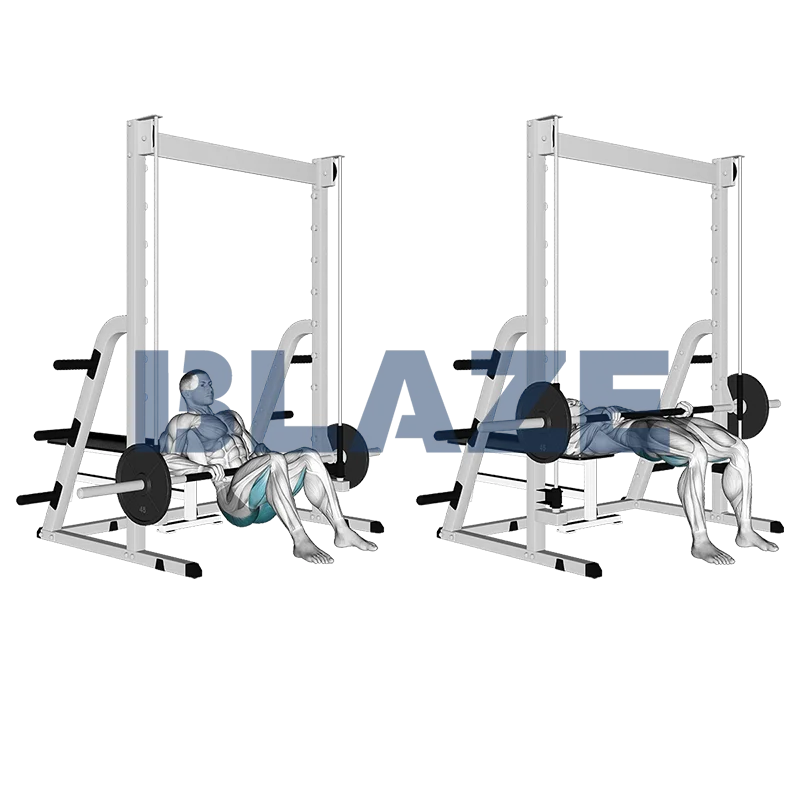
The Smith machine hip thrust is a powerful exercise primarily targeting the glutes, hamstrings, and lower back muscles. By providing a stable and controlled movement, it maximizes glute activation, promoting enhanced muscle growth and strength. This exercise is beneficial for athletes as it significantly improves hip extension power, crucial for sprinting, jumping, and overall lower body performance. It also aids in pelvic stability and reducing injury risk. Incorporating the Smith Hip Thrust into a workout regime can yield superior athletic performance and aesthetic development.
Community Averages
54kg
Avg. weight
118lbs
Avg. weight
* Based on data from the Blaze community
Description
- 1Positioning: Sit on the side of a bench holding a weight plate with both hands. Rest the weight plate on your abdomen. Carefully slide your buttocks off the bench and rest your back against the edge of the bench, just below your shoulder blades.
- 2Initial Movement: Raise one leg off the floor while keeping your torso rigid and both hands on the weight plate.
- 3Thrust Motion: Exhale and raise the weight plate by extending the hip of your supporting leg. Remember to keep your torso stable.
- 4Hold and Squeeze: Hold this position for a count of two and squeeze your glute.
- 5Return: Inhale as you lower the weight plate back to the starting position by flexing the hip of your supporting leg.
- 6Repetition: Repeat the thrust movement for the prescribed number of repetitions.
- 7Switch Legs: Once you complete the reps on one leg, switch to the opposite leg and repeat the exercise.
Tips & Tricks
- •Feet Placement: Ensure your feet are shoulder-width apart and positioned so that when you thrust upwards, your shins are perpendicular to the floor. This will help in targeting the glutes effectively.
- •Back Support: Position your upper back against the bench at an optimal angle. Your shoulder blades should rest on the bench, allowing a full range of motion while maintaining stability.
- •Barbell Positioning: Place the barbell at the crease of your hips. Use a pad or towel around the bar to prevent discomfort and focus on the exercise.
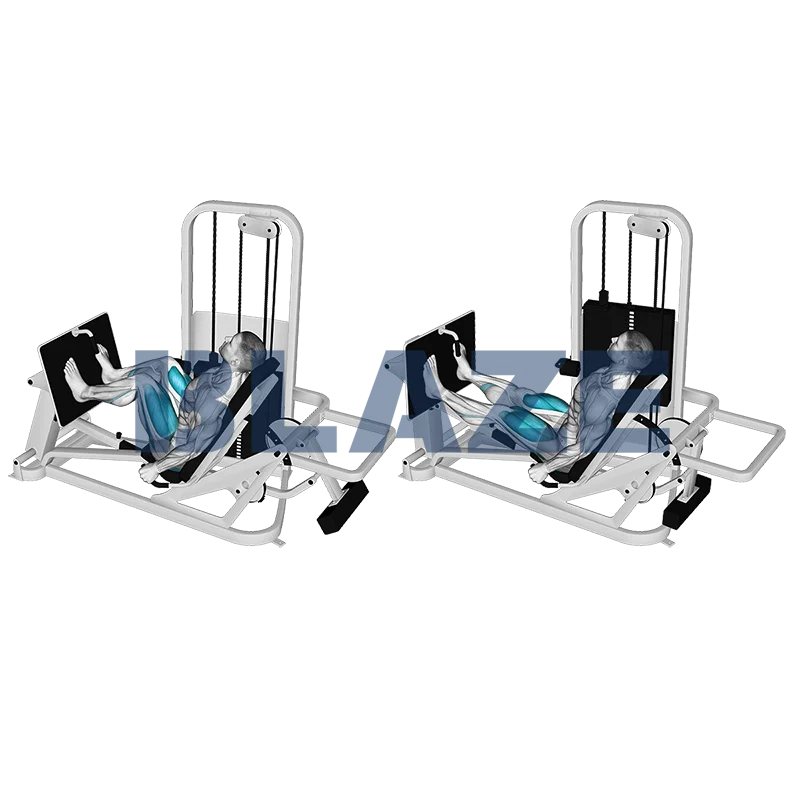
The machine horizontal leg press is a powerhouse exercise perfect for building lower body strength and muscle mass. This exercise predominantly targets the quadriceps, hamstrings, glutes, and calves. It also engages the core for stabilization. The benefits of incorporating the machine Horizontal Leg Press into your routine include enhanced lower body power, greater muscle hypertrophy, and improved joint stability. Athletes can profit from this exercise by increasing their explosive strength, essential for sports like sprinting and jumping. Furthermore, its controlled movement reduces the risk of injury, making it suitable for all fitness levels.
Community Averages
103kg
Avg. weight
228lbs
Avg. weight
* Based on data from the Blaze community
Description
- 1Sit in the leg press machine with your back firmly against the back support.
- 2Place your feet hip-width apart on the platform.
- 3Release the safety bars and hold onto the side handles for support.
- 4Extend your legs without locking your knees, creating a 90-degree angle between your torso and legs.
- 5Inhale and bend your legs, lowering the platform until your knees are almost fully flexed.
- 6Drive with your heels and press the platform back up to the starting position while exhaling.
- 7Repeat the exercise for desired number of repetitions.
- 8After finishing, lock the safety bars to prevent the platform from sliding down.
Tips & Tricks
- •Foot Placement: Vary your foot placement to target different parts of your legs. A higher foot position emphasizes the glutes and hamstrings, while a lower position targets the quadriceps more.
- •Controlled Movements: Control the tempo of your reps-avoid rapid, jerky motions. Slow and controlled movements ensure maximum muscle engagement and minimize injury risk.
- •Maintain Proper Form: Keep your back flat against the seat and ensure that your knees stay in line with your feet. This helps in avoiding undue stress on your joints.
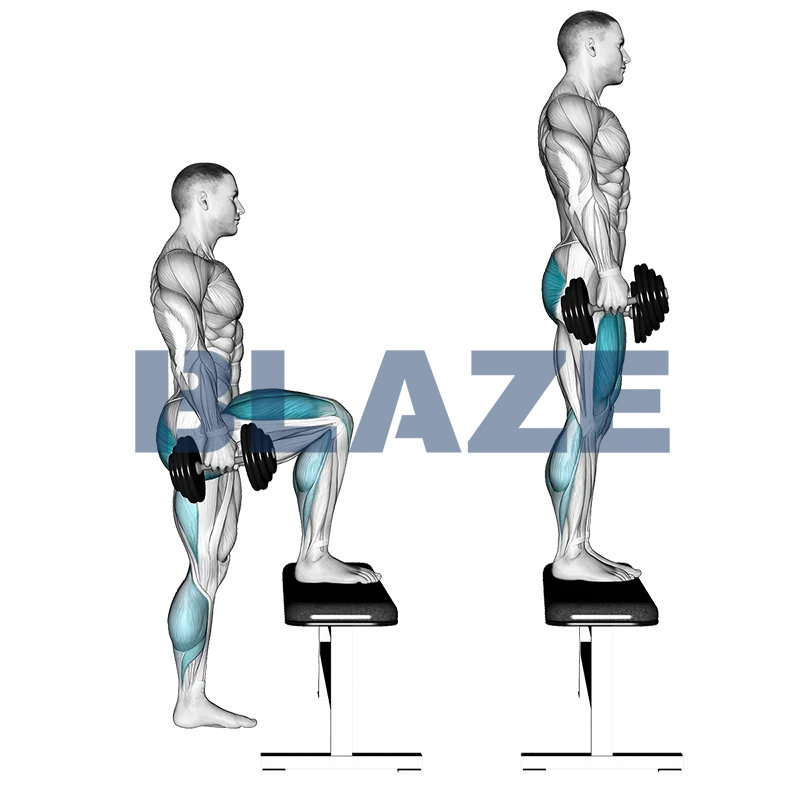
The dumbbell step up is an effective exercise for building lower body strength and improving balance. It primarily targets the quadriceps, hamstrings, and glutes, while also engaging the calves and core for stabilization. Athletes can benefit from this exercise as it enhances functional strength, which is essential for sports that require powerful leg movements like running, jumping, and cycling. Additionally, it helps to address muscular imbalances and improve overall coordination, making it a valuable addition to any training regimen.
Community Averages
31kg
Avg. weight
69lbs
Avg. weight
* Based on data from the Blaze community
Description
- 1Stand facing a raised platform (e.g., a bench) while holding a dumbbell in each hand by your sides.
- 2Exhale as you step up onto the bench with your right leg, pressing your foot firmly onto the surface.
- 3Bring your left foot up so that both feet are together on the bench.
- 4Inhale as you carefully step down off the bench with your right leg first.
- 5Follow by bringing your left foot down so both feet are together on the floor.
- 6Repeat the process, this time leading with your left leg.
- 7Continue alternating legs for the desired number of repetitions.
Tips & Tricks
- •Choose the Right Height: The platform height should be challenging yet manageable. Ideally, it should be around knee height. If you’re a beginner, opt for a lower step and gradually increase the height as you become more comfortable.
- •Maintain Proper Form: Keep your back straight and core engaged throughout the exercise. Avoid leaning forward or letting your lower back curve excessively.
- •Mind Your Foot Placement: Place your entire foot on the bench or platform to ensure stability. Avoid pushing off the toe or the edge of your foot.
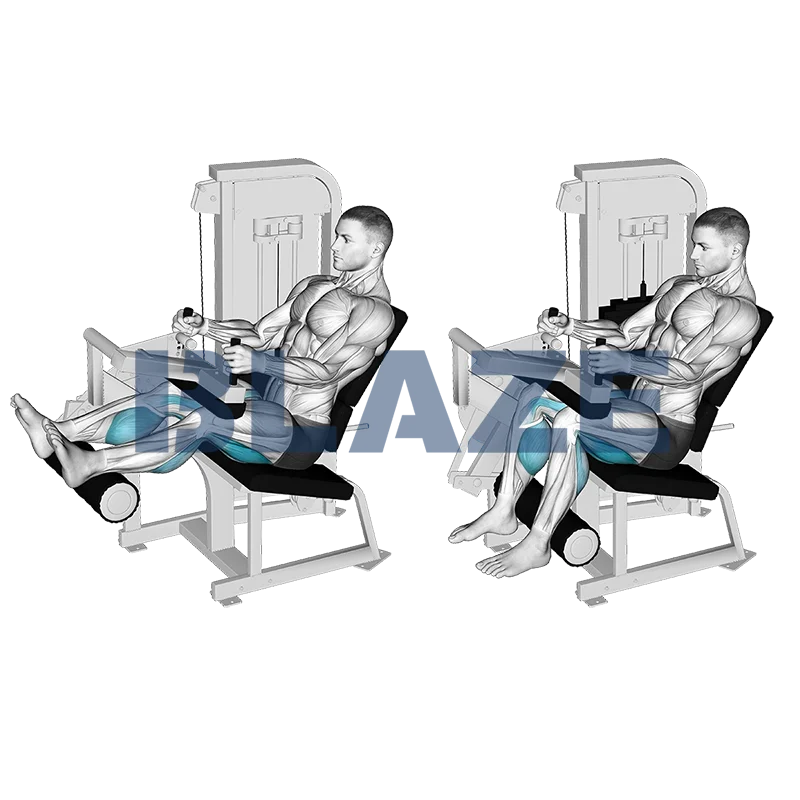
The machine seated leg curl is a highly effective exercise focusing primarily on the hamstrings, with secondary activation of the calf muscles. This exercise is pivotal for athletes as it enhances lower body strength, contributes to muscle balance, and reduces the risk of injury. Efficiently targeting the hamstrings, it aids in improved sprinting speed, jumping ability, and overall leg endurance. The machine's controlled motion ensures proper form, making it suitable for both beginners and advanced athletes aiming to optimize their performance and athletic capabilities.
Community Averages
43kg
Avg. weight
94lbs
Avg. weight
* Based on data from the Blaze community
Description
- 1Adjust the Machine: Ensure the machine’s pads are set up so they sit comfortably against your lower back when seated.
- 2Position Your Legs: Place your legs on the padded lever so it rests just below your calf muscles.
- 3Secure the Lap Pad: Adjust the lap pad so it sits securely on your thighs, just above the knees.
- 4Lift and Grip: Straighten your legs out in front of you and grasp the side handles of the machine.
- 5Execute the Movement: Pull the padded lever down and back towards you using your legs as far as you can.
- 6Hold and Return: Hold the position for a second, then slowly return the lever back to the starting position.
- 7Repeat the movement in a controlled manner for your desired number of repetitions.
Tips & Tricks
- •Ensure the pad is adjusted to rest comfortably against the back of your lower legs just above the ankles. This helps in maximizing the range of motion.
- •Breathe out as you curl the weight towards you and breathe in as you slowly return to the starting position. Controlled breathing can enhance your focus and performance.
- •Perform each repetition through a full range of motion to effectively target your hamstrings. Avoid partial reps to prevent muscle imbalances.
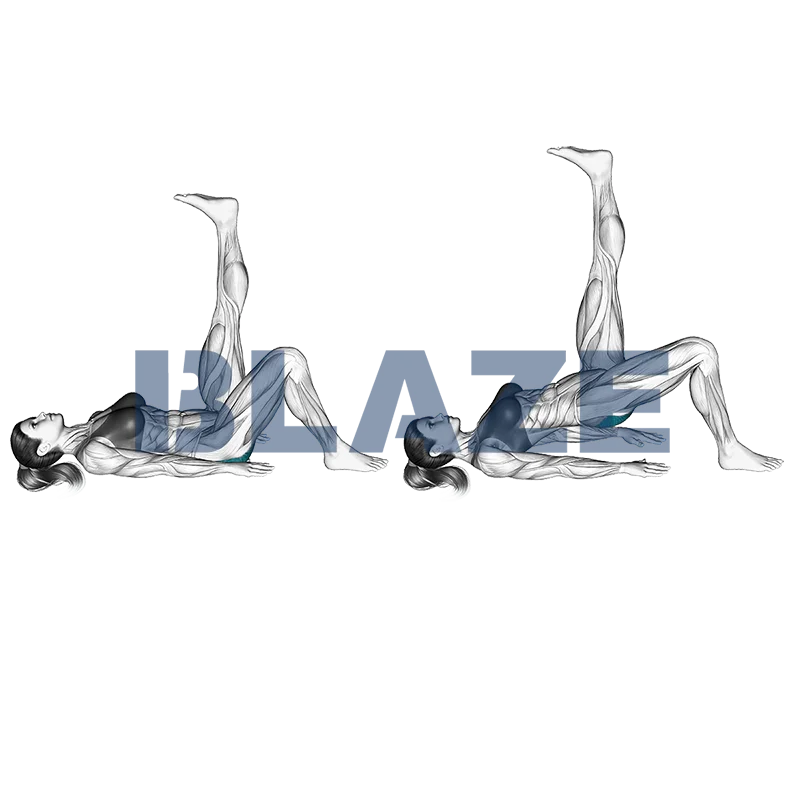
The single straight leg glute bridge is an effective exercise that targets the glutes, hamstrings, and lower back. By holding a single leg in a straight position while performing a glute bridge, this exercise enhances core stability, improves muscular endurance, and promotes unilateral strength. Athletes benefit from this exercise by developing the strength necessary for explosive movements and improving balance and posture critical for injury prevention. This exercise also helps in enhancing overall athletic performance by activating key muscles used in running and jumping.
Community Averages
22
Avg. reps/set
* Based on data from the Blaze community
Description
- 1Starting Position: Lie on your back with your legs straight and your arms by your sides.
- 2Prepare: Flex your right knee and place your right foot flat on the floor.
- 3Leg Position: Keep your left leg straight and level with your torso.
- 4Lift: Exhale as you raise your hips off the floor by extending your right hip. Your body should form a straight line from your shoulders to your left foot.
- 5Hold: Maintain this position for a count of two.
- 6Lower: Inhale as you slowly lower your hips back to the starting position.
- 7Repetitions: Complete the prescribed number of repetitions.
- 8Switch Legs: Repeat the exercise with your opposite leg.
Tips & Tricks
- •Proper Alignment: Make sure your body forms a straight line from your shoulders to your knees at the peak of the movement. Keep your core engaged to maintain proper alignment and avoid arching your lower back.
- •Foot Placement: Position your supporting foot close to your glutes to maximize glute activation. The closer your heel is to your glutes, the more you engage the glute muscles.
- •Heel Drive: Drive through the heel of your supporting foot rather than the toes. This ensures you're targeting your glutes and hamstrings more effectively.
Start this workout in the Blaze app
Download Blaze Workout Tracker and follow this plan with guided sets and tracking.