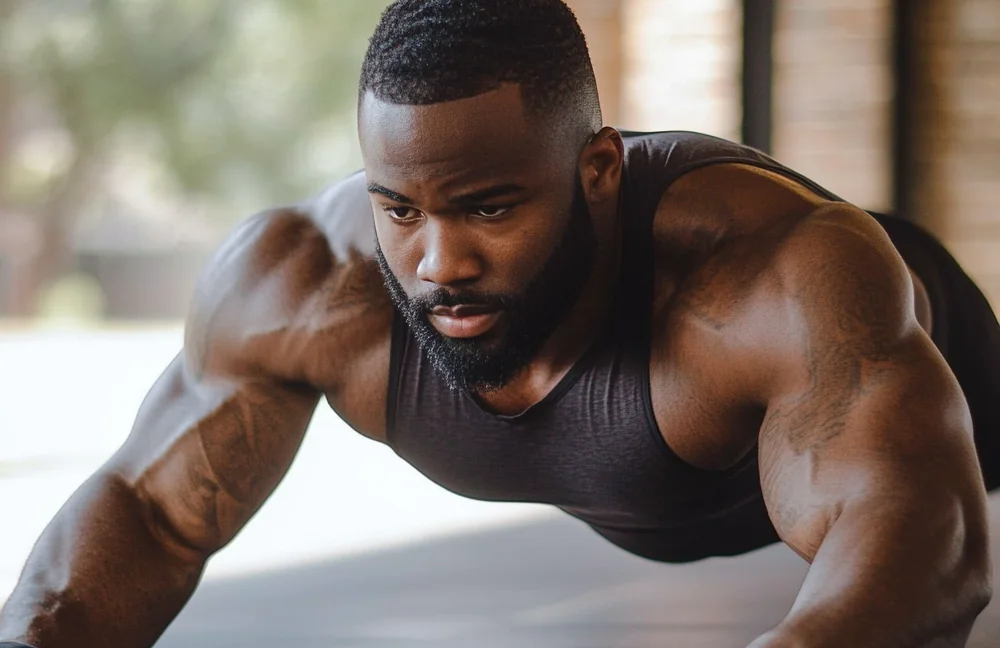
1 Hour Strength Training
Step into your strongest self with this 1 Hour Strength Training, designed to push your limits and build serious muscle. This focused routine uses progressive overload to keep your muscles challenged and growing, session after session. Perfect for those who want consistent gains in strength, this workout is packed with efficient, powerful moves that engage every major muscle group.
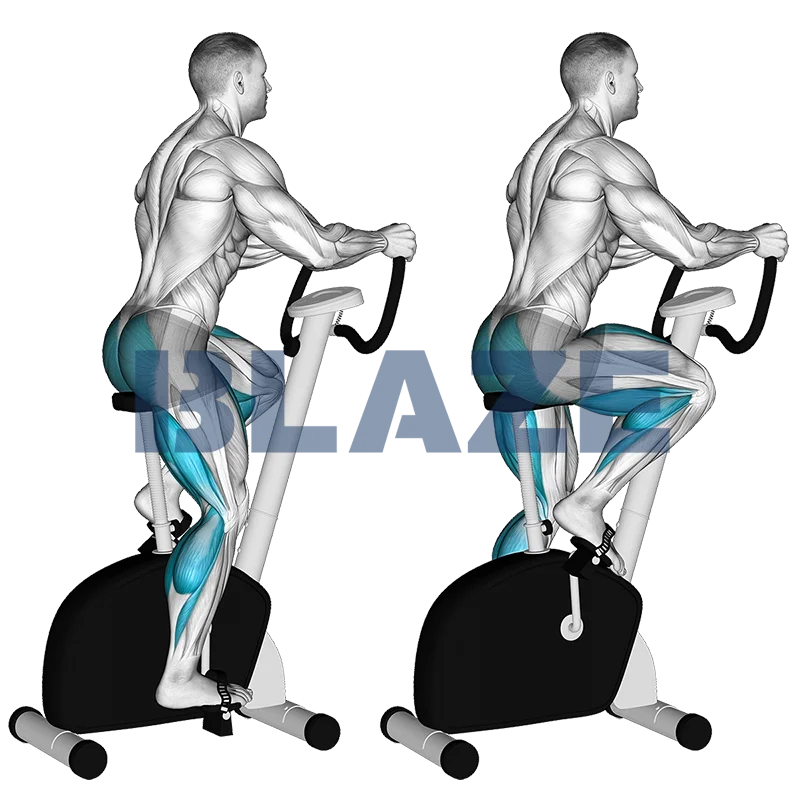
The stationary bike run offers numerous benefits, including enhanced cardiovascular health, improved endurance, and effective calorie burning, making it ideal for weight management. This exercise primarily targets the quadriceps, hamstrings, glutes, and calves while also engaging the core for stability, offering a comprehensive lower-body workout. Athletes profit from incorporating this exercise into their routine as it increases overall stamina, supports muscle recovery with low-impact movement, and improves leg strength and power essential for various sports.
Community Averages
0:14:12
Avg. duration
* Based on data from the Blaze community
Description
- 1Seat Adjustment: Sit on the stationary bike and adjust the seat height so that your legs are slightly bent at the bottom of the pedal stroke.
- 2Start the Bike: Begin pedaling to turn on the bike's console if necessary.
- 3Select Settings: Choose your desired workout setting from the menu, either manual or from pre-set programs.
- 4Enter Information: Input your age and weight to get an estimate of the calories burned during your session.
- 5Adjust Resistance: Set your initial resistance level, and remember you can adjust it during the workout to vary the intensity.
- 6Monitor Heart Rate: Use the handles to track your heart rate and ensure you are working out at an appropriate intensity level.
- 7Begin Cycling: Start pedaling at a moderate pace and maintain a steady rhythm.
- 8Cool Down: Towards the end of your workout, gradually reduce your intensity to cool down.
Tips & Tricks
- •Adjust Your Seat Properly: Ensure that your seat height allows a slight bend in your knees when pedaling. An improperly adjusted seat can lead to discomfort or injury.
- •Warm-Up and Cool Down: Always start with a 5-10 minute warm-up at a moderate pace. Similarly, cool down with gentle pedaling and stretching after your session to help with recovery.
- •Maintain Good Posture: Keep your back straight, core engaged, and grip the handlebars lightly. Avoid hunching over, as this can cause back and neck strain.
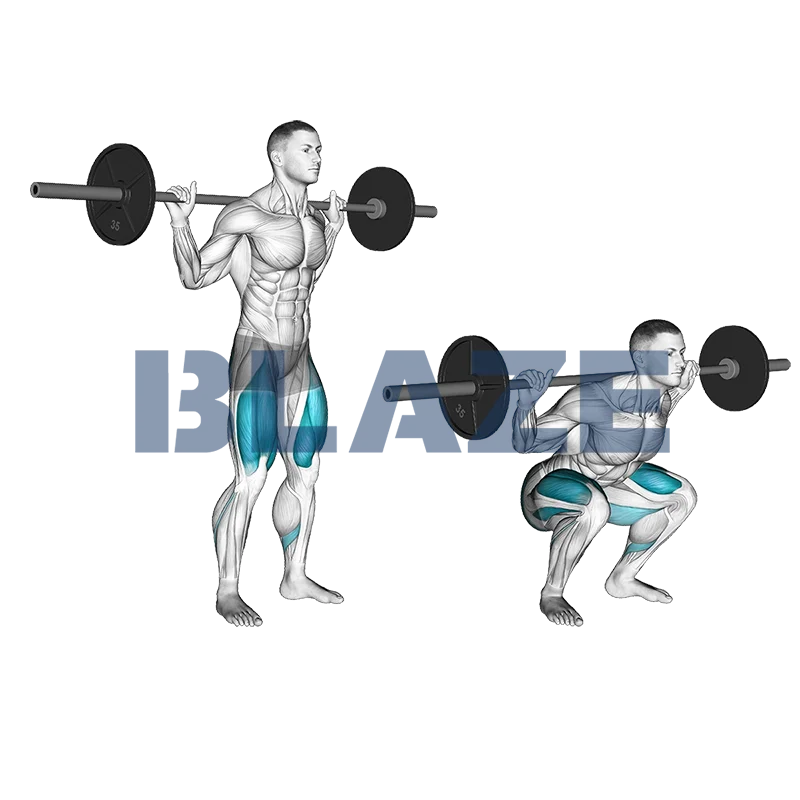
The barbell squat is a foundational exercise that offers multiple benefits, including improved strength, power, and muscle mass. Key muscle groups activated during this exercise include the quadriceps, hamstrings, glutes, and lower back. For athletes, incorporating barbell squats can enhance performance by promoting better balance, agility, and explosiveness, which are crucial for sports like football, basketball, and track. Additionally, squats improve core stability and support injury prevention by strengthening connective tissues and joints.
Community Averages
55kg
Avg. weight
122lbs
Avg. weight
* Based on data from the Blaze community
Description
- 1Load a barbell on a rack at upper-chest level. Step under the barbell so that it rests on the back of your shoulders, and grasp the bar at each side. Hands are slightly wider than shoulder-width apart.
- 2Dismount the barbell and step backward. Your feet should be shoulder-width apart and must slightly point outwards.
- 3Inhale as you squat down by simultaneously pushing the hips back and bending your knees and hips to lower the torso. Keep your torso upright, and descend at least until your knees are bent at a 90-degree angle.
- 4Be careful that your knees do not extend beyond an imaginary line drawn vertically upward from your toes. Instead, push your butt backwards to avoid this.
- 5Exhale as you push your body back up to the starting position, still keeping your torso upright.
- 6You have completed your first repetition. Repeat the motion in a controlled way and count your reps.
Tips & Tricks
- •Warm-Up Thoroughly: Always start with a comprehensive warm-up to prepare your muscles and joints. This can include dynamic stretches and light cardio to get your blood flowing.
- •Head Position: Keep your head facing forward and eyes fixed on a point in front of you. This helps maintain balance and keeps your spine aligned.
- •Chest Up: Ensure your chest is up and your back is neutral throughout the movement. Avoid rounding your back to prevent spinal injuries.
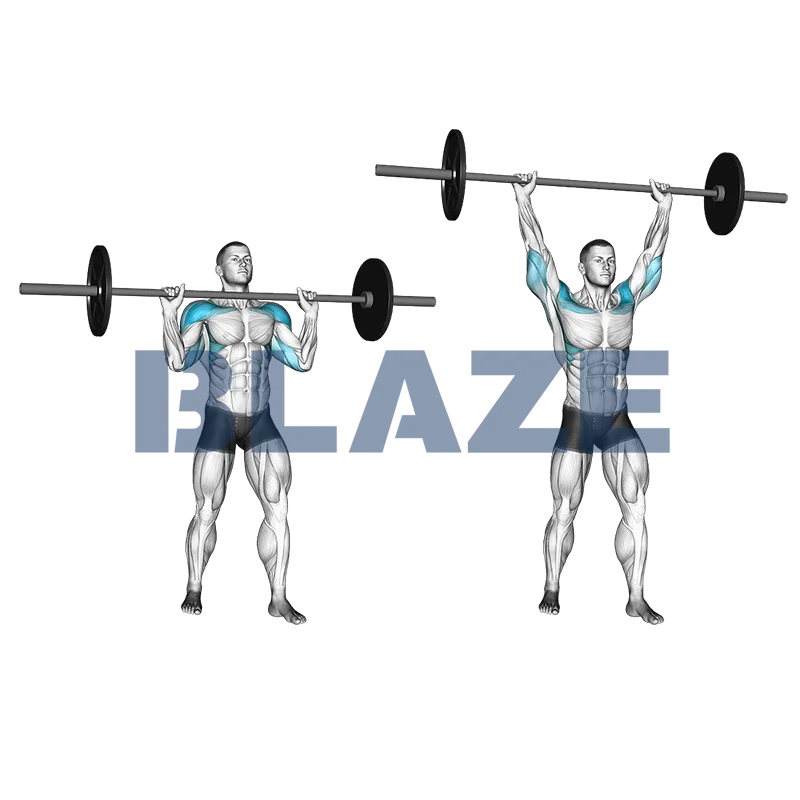
The standing military press (with barbell) is an effective compound exercise ideal for developing upper body strength. Key benefits include enhanced shoulder muscle hypertrophy, improved core stability, and better lifting performance. This exercise primarily targets the deltoids, triceps, and upper pectorals while also engaging the core for stabilization. Athletes profit from the Standing Military Press due to its functional strength gains, which translate into improved performance in various sports activities and daily tasks requiring upper body power and coordination.
Community Averages
33kg
Avg. weight
72lbs
Avg. weight
* Based on data from the Blaze community
Description
- 1Set up a barbell on a squat rack at chest height. Select appropriate weights.
- 2Stand under the bar and grasp it with a pronated grip, wider than shoulder-width apart.
- 3Slightly bend your knees and position the barbell on your collarbone.
- 4Lift the barbell to rest on your chest, then step back and position your feet shoulder-width apart.
- 5Press the barbell overhead by extending your arms until they are locked, with the bar slightly in front of your head.
- 6Lower the barbell to your collarbone slowly while inhaling.
- 7Press the barbell back up to the starting position as you exhale.
- 8Repeat for the recommended number of repetitions.
Tips & Tricks
- •Engage Your Core: Tighten your core muscles throughout the movement to maintain stability and support your lower back. This prevents excessive arching and potential injury.
- •Grip Width: Ensure your grip is slightly wider than shoulder-width. This helps in better activation of the shoulder muscles and improves the range of motion.
- •Wrist Alignment: Keep your wrists straight and in line with your forearms to avoid unnecessary strain and reduce the risk of injury.
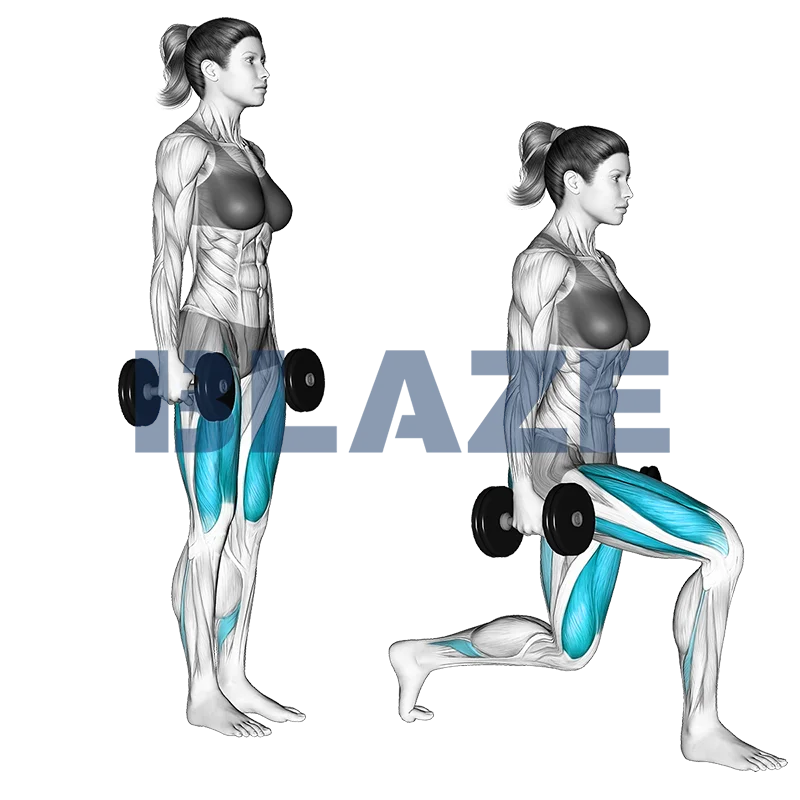
The dumbbell split squat is a powerful unilateral exercise that targets the quads, glutes, and hamstrings. This move also engages the core, enhancing stability and balance. Athletes benefit from improved lower body strength, symmetry, and injury prevention. The unilateral nature of the split squat helps correct muscle imbalances and enhances coordination. By incorporating this exercise into their routine, athletes can enhance their performance in sports requiring leg strength, agility, and power.
Community Averages
25kg
Avg. weight
56lbs
Avg. weight
* Based on data from the Blaze community
Description
- 1Hold a dumbbell in each hand and stand upright with the dumbbells hanging by your sides.
- 2Inhale as you take a large step forward with one leg and bend the knee of that leg until there is a 90 degree angle between your thigh and your calf. The knee of your other (back) leg should almost touch the floor.
- 3Exhale as you drive back up with your front leg and step back into the standing position.
- 4You have completed your first repetition.
- 5Repeat the same motion with your opposite leg. Keep alternating the leg with each lunge.
Tips & Tricks
- •Maintain Proper Posture: Keep your upper body straight, with shoulders back and relaxed, and chin up. Picking a point to focus on in front of you can help you maintain balance.
- •Engage Your Core: Engage your core muscles throughout the movement to maintain stability and support your lower back.
- •Focus on Form, Not Speed: Perform the exercise slowly and with control rather than rushing through it. This ensures proper muscle engagement and reduces the risk of injury.
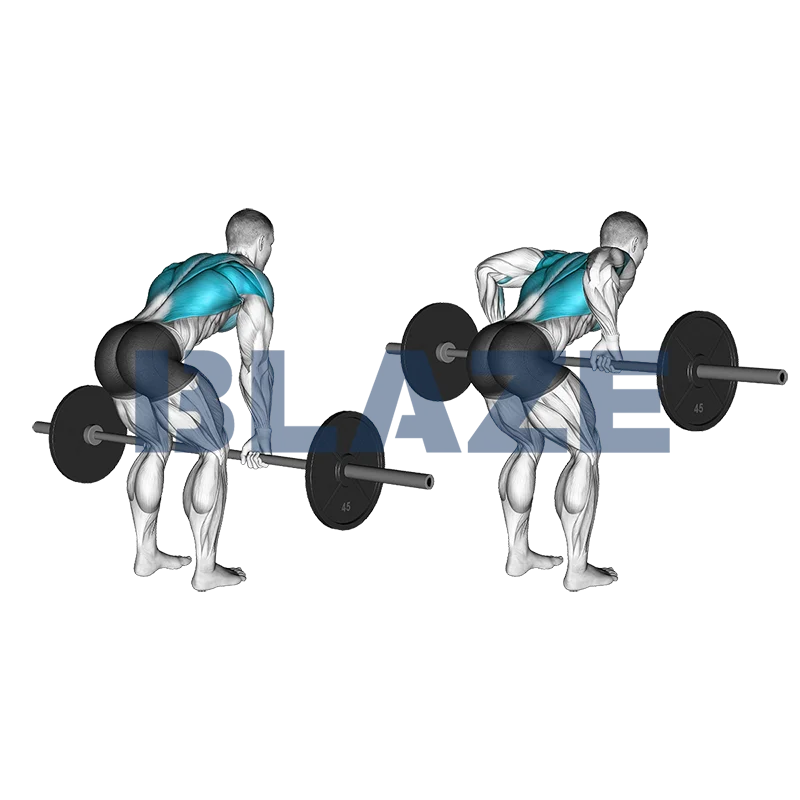
The bent over row with barbell is a highly effective exercise targeting the upper and lower back, shoulders, and biceps. By engaging the latissimus dorsi, rhomboids, trapezius, and the posterior deltoids, it promotes a balanced and strong upper body. This exercise also stabilizes the core and enhances overall posture. Athletes, especially those in sports requiring pulling strength like rowing or climbing, will benefit from improved muscular endurance, strength, and stability. Incorporating this exercise aids in enhancing athletic performance and injury prevention.
Community Averages
44kg
Avg. weight
96lbs
Avg. weight
* Based on data from the Blaze community
Description
- 1Stand over a barbell, the bar should line up with your toes.
- 2Bend your hips and your knees and grasp the barbell with both hands a little wider than shoulder-width apart. Your back should be straight and your spine should form one line with your head.
- 3Flex your core muscles and exhale as you pull the barbell up to your waist or stomach using your arms and the strength of your back and core.
- 4Hold for a count of two and squeeze your back.
- 5Inhale and lower the barbell in a controlled manner until it nearly touches the floor. Keep your core flexed and your back straight.
- 6You have completed your first repetition. Repeat the motion in a controlled way and count your reps.
- 7On completion of your last rep, lower the barbell to the floor.
Tips & Tricks
- •Maintain a Strong Core: Keep your abdominal muscles engaged throughout the exercise to support your lower back.
- •Neutral Spine: Ensure your spine stays neutral, avoiding any rounding or arching to prevent strain on your back.
- •Proper Angle: Bend at your hips so your torso is at about a 45-degree angle to the floor, and keep this angle consistent throughout the movement.
Description
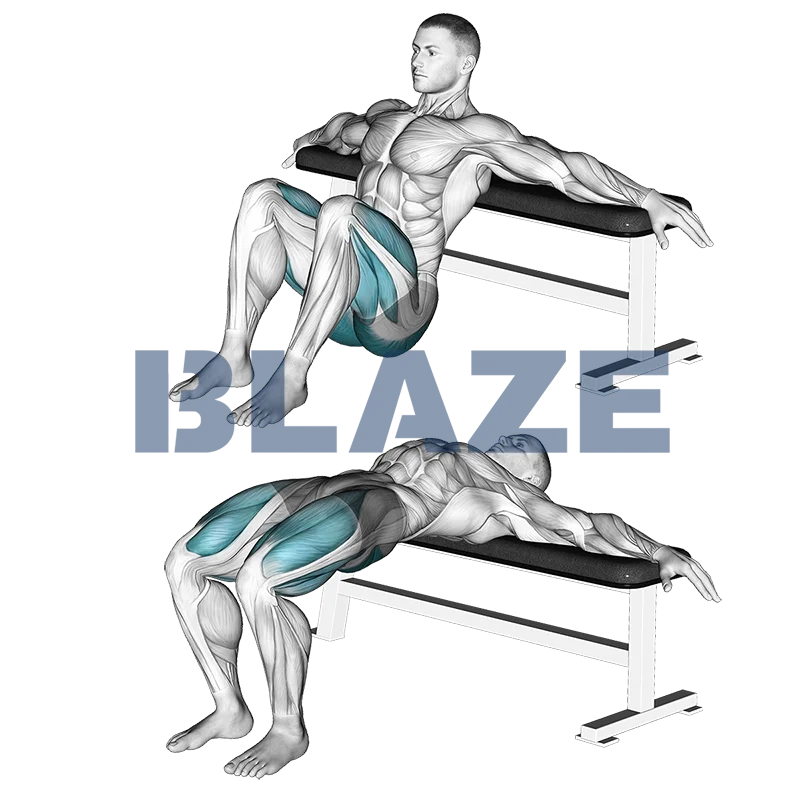
- 1Set Up: Sit on the floor with your upper back against the long side of a bench.
- 2Position Your Feet: Bend your knees and plant your feet on the floor in front of you, shoulder-width apart.
- 3Lift Your Pelvis: Keeping your back neutral, exhale as you raise your pelvis by fully extending your hips.
- 4Hold: Hold the elevated position for a count of two.
- 5Lower Your Pelvis: Inhale as you return your pelvis back down to the floor.
- 6Repeat: Repeat the movement for the desired number of repetitions.
Tips & Tricks
- •Use Proper Padding: Make sure to use a bar pad or a squat sponge to protect your hips from the weight of the barbell. This will make the exercise more comfortable and allow you to focus on form.
- •Foot Placement: Place your feet shoulder-width apart and ensure they are flat on the ground. Adjust the distance of your feet from your body to find the position where you feel the most glute activation.
- •Core Engagement: Maintain a tight core throughout the movement to protect your lower back and maximize glute engagement. This will also help prevent overextension of the lower back.
Start this workout in the Blaze app
Download Blaze Workout Tracker and follow this plan with guided sets and tracking.