
1 Hour Full-Body Workout
Ready to transform your body and boost your fitness - all in just one hour? This 1-Hour Full-Body Workout is designed for those with busy schedules who want to get the most out of every minute. With a balanced mix of cardio and strength moves, you’ll work every major muscle group, improve cardiovascular endurance, and build functional strength - all without sacrificing your precious time.
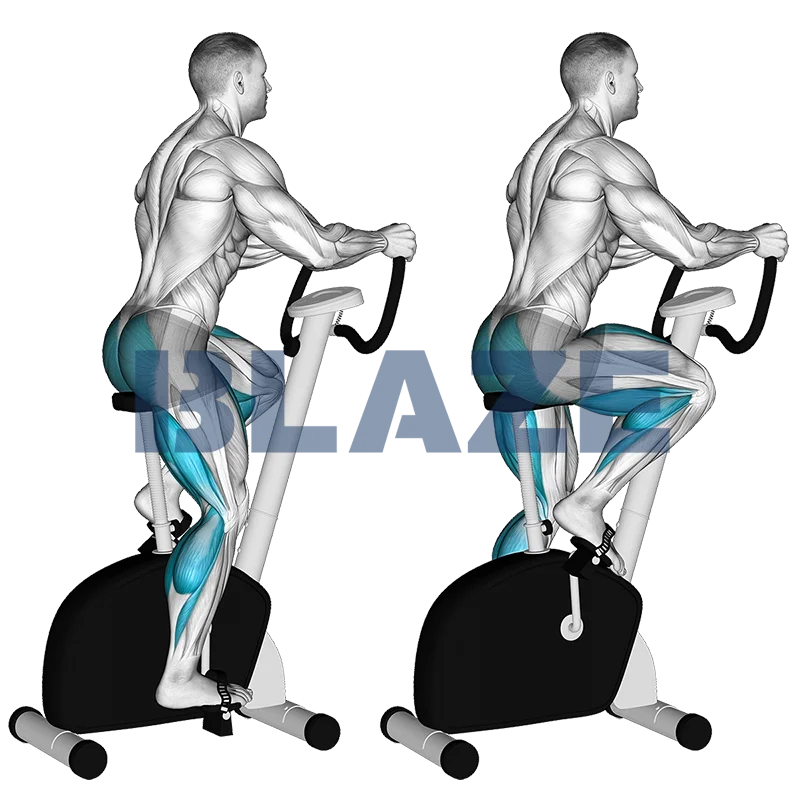
The stationary bike run offers numerous benefits, including enhanced cardiovascular health, improved endurance, and effective calorie burning, making it ideal for weight management. This exercise primarily targets the quadriceps, hamstrings, glutes, and calves while also engaging the core for stability, offering a comprehensive lower-body workout. Athletes profit from incorporating this exercise into their routine as it increases overall stamina, supports muscle recovery with low-impact movement, and improves leg strength and power essential for various sports.
Community Averages
0:14:12
Avg. duration
* Based on data from the Blaze community
Description
- 1Seat Adjustment: Sit on the stationary bike and adjust the seat height so that your legs are slightly bent at the bottom of the pedal stroke.
- 2Start the Bike: Begin pedaling to turn on the bike's console if necessary.
- 3Select Settings: Choose your desired workout setting from the menu, either manual or from pre-set programs.
- 4Enter Information: Input your age and weight to get an estimate of the calories burned during your session.
- 5Adjust Resistance: Set your initial resistance level, and remember you can adjust it during the workout to vary the intensity.
- 6Monitor Heart Rate: Use the handles to track your heart rate and ensure you are working out at an appropriate intensity level.
- 7Begin Cycling: Start pedaling at a moderate pace and maintain a steady rhythm.
- 8Cool Down: Towards the end of your workout, gradually reduce your intensity to cool down.
Tips & Tricks
- •Adjust Your Seat Properly: Ensure that your seat height allows a slight bend in your knees when pedaling. An improperly adjusted seat can lead to discomfort or injury.
- •Warm-Up and Cool Down: Always start with a 5-10 minute warm-up at a moderate pace. Similarly, cool down with gentle pedaling and stretching after your session to help with recovery.
- •Maintain Good Posture: Keep your back straight, core engaged, and grip the handlebars lightly. Avoid hunching over, as this can cause back and neck strain.
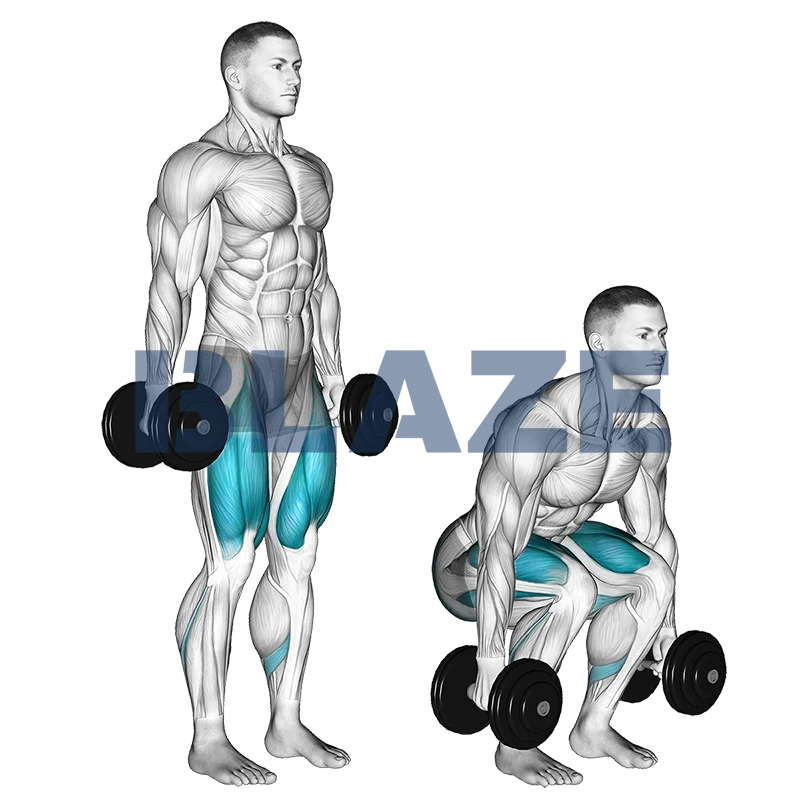
The dumbbell squat is a powerful exercise benefiting overall strength, particularly for athletes. It primarily targets the quadriceps, glutes, hamstrings, and core, promoting balanced muscle development and improved stability. By enhancing lower body strength, it boosts athletic performance, aiding in explosive movements crucial for sports like basketball and soccer. Additionally, the exercise supports joint health and flexibility, which reduces injury risk. The engagement of core muscles during the squat further improves balance and posture, key components for any athletic discipline.
Community Averages
23kg
Avg. weight
50lbs
Avg. weight
* Based on data from the Blaze community
Description
- 1Stand upright holding a pair of dumbbells by your sides with your feet shoulder-width apart and pointing slightly outward.
- 2Ensure your torso is upright and your shoulders are pulled back to maintain proper posture.
- 3Inhale as you squat down by pushing your butt backward and bending your knees forward.
- 4Lower your body at least until your thighs are parallel with the floor, keeping your torso upright.
- 5Exhale as you push yourself back up to a standing position, driving through your heels.
- 6Repeat the motion for the prescribed number of repetitions, maintaining control throughout.
Tips & Tricks
- •Choose the Right Weight: Start with a weight that is comfortable for you. It’s better to use lighter weights and maintain proper form than to use heavy weights and risk injury.
- •Focus on Form: Keep your back straight, chest up, and core tight throughout the exercise. Avoid leaning forward or rounding your back.
- •Depth Matters: Lower yourself until your thighs are at least parallel to the ground. Going deeper can be more effective, but only if you can maintain proper form.
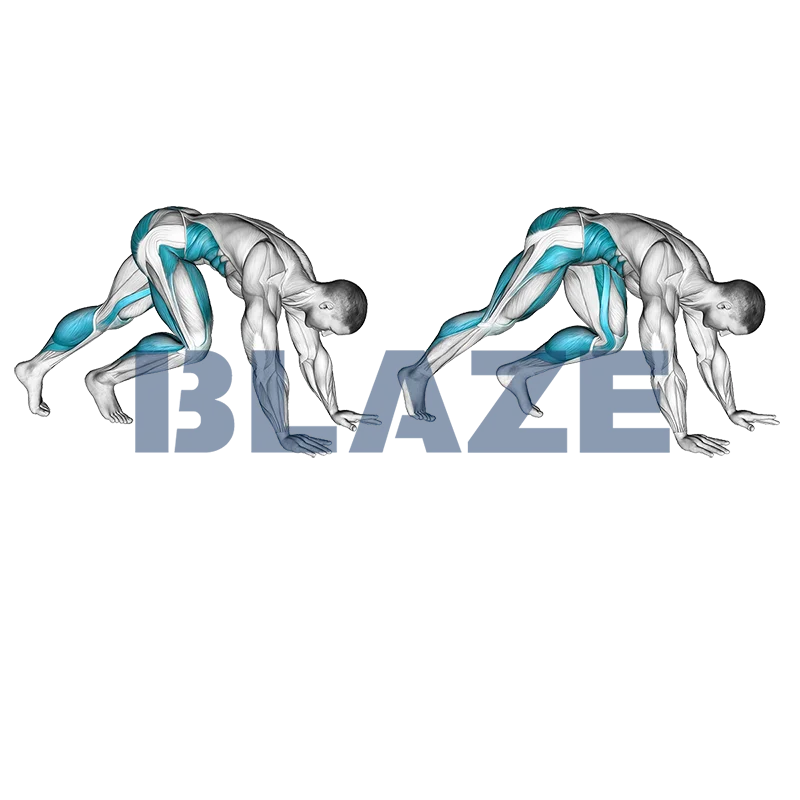
Mountain climbers are a dynamic full-body exercise that offers numerous benefits. They primarily target the core, shoulders, chest, and legs, making them excellent for building overall strength and endurance. This exercise improves cardiovascular fitness, enhances agility, and promotes better balance and coordination. Athletes profit from Mountain Climbers as they aid in developing explosive power and speed, essential for sports performance. Additionally, Mountain Climbers can help burn calories and improve metabolic rate, contributing to better body composition.
Community Averages
25
Avg. reps/set
* Based on data from the Blaze community
Description
- 1Start Position: Begin in a standard pushup position, with your hands and toes supporting your weight. Keep your body in a straight line from head to heels.
- 2Prepare to Move: Flex one knee and hip to bring one leg forward until your knee is approximately under your hip. This is your starting position.
- 3Explosive Switch: Quickly switch the positions of your legs by extending the bent leg back to the starting pushup position and simultaneously bringing the other leg forward with the knee under the hip.
- 4Continuous Motion: Continue to explosively switch legs in an alternating fashion.
- 5Duration: Maintain this movement rhythmically for 20-30 seconds.
- 6End Position: Finish by bringing both legs back to the starting pushup position.
- 7Remember to keep your core engaged and your movements controlled throughout the exercise.
Tips & Tricks
- •Maintain a Strong Plank Position: Keep your core engaged and your body in a straight line from head to heels. Avoid letting your hips sag or pike.
- •Focus on Your Form: Quality over quantity. It's better to perform fewer reps with proper form than to do many with poor technique.
- •Controlled Movements: Bring your knees towards your chest in a controlled manner rather than rushing through the motions. This reduces the risk of injury and increases muscle engagement.
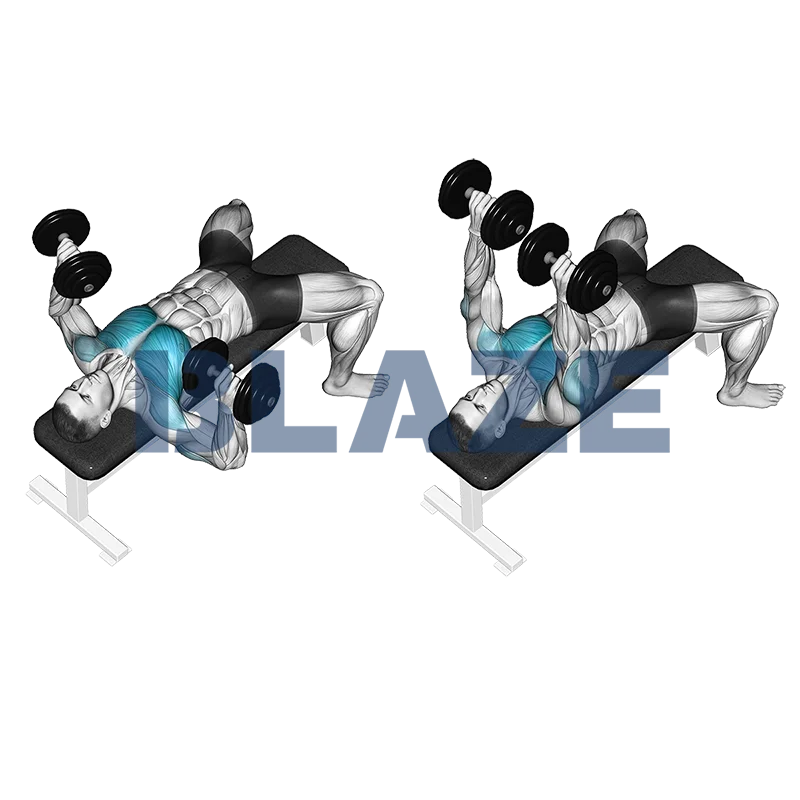
The dumbbell bench press is a versatile upper-body exercise primarily targeting the pectoral muscles (chest), triceps, and deltoids (shoulders). By using dumbbells, athletes benefit from an increased range of motion and enhanced stabilization compared to a traditional barbell bench press. This exercise promotes muscle symmetry, reduces muscular imbalances, and improves functional strength, which is crucial for athletic performance. Suitable for all fitness levels, it aids in hypertrophy, strength building, and overall upper-body conditioning, making it a valuable addition to any athlete's training regimen.
Community Averages
37kg
Avg. weight
82lbs
Avg. weight
* Based on data from the Blaze community
Description
- 1Hold a dumbbell in each hand, sit on a flat bench and rest one dumbbell on each knee.
- 2While you lie back on the bench, kick each dumbbell up into position resting on your chest, one at a time.
- 3Position the dumbbells to the sides of your chest. Tuck your elbows in to approximately a 45-degree angle.
- 4Place your feet firmly on the ground. Exhale as you press the dumbbells upward and inward until your arms are almost fully extended and the dumbbells nearly touch above the center of your face.
- 5Inhale as you slowly lower the dumbbells back to the starting position. For an extra pump, lower the dumbbells beyond the starting position until you feel a slight stretch in your chest.
- 6You have completed your first repetition. Repeat the motion in a controlled way and count your reps.
Tips & Tricks
- •Neutral Grip: Hold the dumbbells with a neutral grip, meaning your palms should face each other. This can reduce strain on your shoulders.
- •Firm Grip: Ensure your grip on the dumbbells is firm but not overly tight to remove unnecessary tension from your arms.
- •Back Arch: Maintain a natural arch in your lower back. Your buttocks, upper back, and head should remain firmly on the bench.
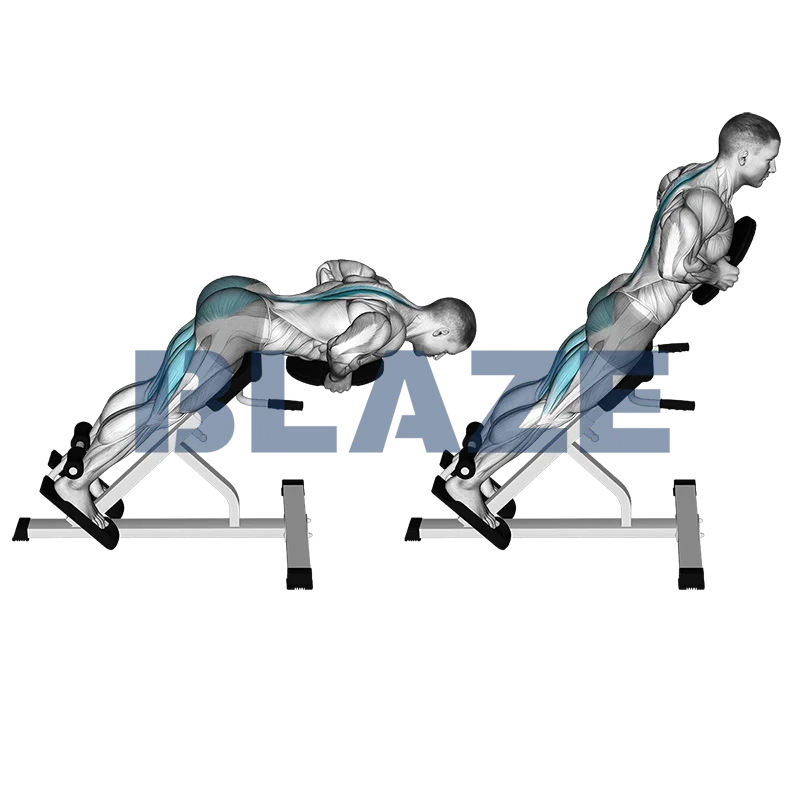
The plate hyperextension is a potent exercise for strengthening the lower back, glutes, and hamstrings. Key benefits include enhanced spinal stability, improved posture, and reduced risk of lower back injuries. This exercise targets the erector spinae muscles and promotes core strength. Athletes profit significantly from the Plate Hyperextension due to its capacity to develop crucial posterior chain muscles, leading to better performance in sports requiring sprinting, jumping, and lifting. Incorporating this exercise can result in a stronger, more resilient back and enhanced overall athletic performance.
Community Averages
19kg
Avg. weight
42lbs
Avg. weight
* Based on data from the Blaze community
Description
- 1Setup: Lie face down on a hyperextension bench. Secure your ankles under the footpads.
- 2Adjust Pad: Adjust the upper pad so that your upper thighs lie flat across it, leaving enough room to bend at the waist freely.
- 3Body Position: Keep your body straight and hold a weight plate in front of you.
- 4Bend Forward: Slowly bend forward at the waist, keeping your back flat. Go as far as you can without rounding your back, feeling a stretch in your hamstrings.
- 5Return to Start: Slowly raise your torso back to the starting position.
- 6Repeat: Follow your training plan, repeating the exercise for the prescribed number of repetitions.
Tips & Tricks
- •Start with a Light Plate: If you're new to this exercise, start with a lighter plate to ensure that your form is correct before increasing the weight.
- •Engage Your Core: Keep your core muscles engaged throughout the movement. This helps stabilize your spine and prevents unnecessary strain on your lower back.
- •Controlled Movements: Focus on slow and controlled movements. Avoid using momentum to lift the weight as this reduces the effectiveness of the exercise and increases the risk of injury.
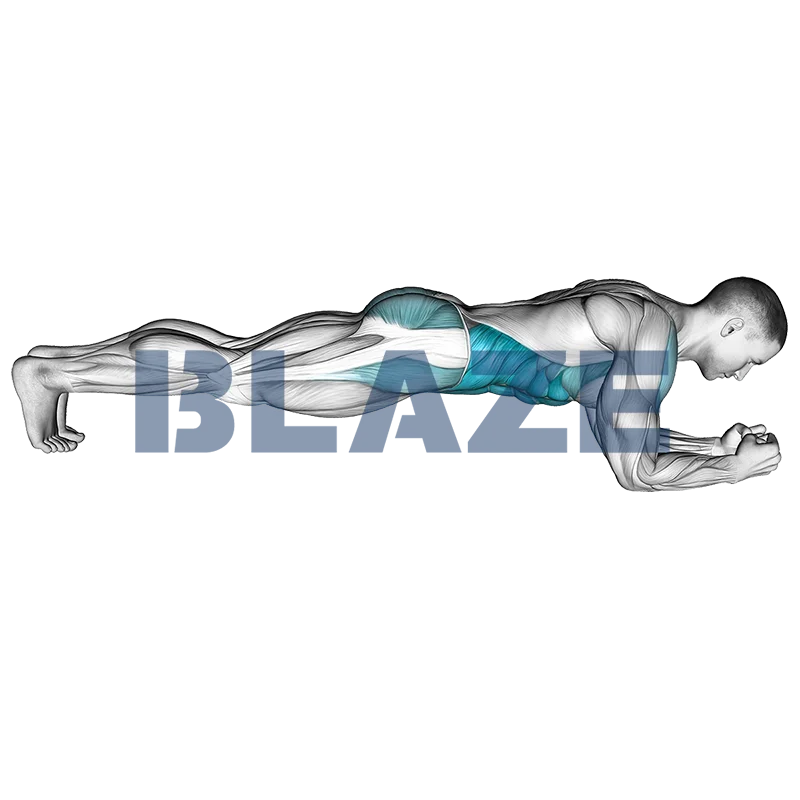
The front plank is a fundamental core exercise offering numerous benefits. Engaging the abdominals, lower back, glutes, hips, and shoulders, it enhances stability and strength in the core region. This exercise is crucial for athletes as it improves posture, reduces the risk of back injuries, and enhances overall athletic performance by providing a solid foundation for movement. Planks also bolster body awareness and coordination, essential for maintaining proper form and efficiency in various sports and physical activities.
Community Averages
0:01:15
Avg. duration
* Based on data from the Blaze community
Description
- 1Rest your knees, feet and elbows on a gym mat.
- 2Extend your feet backward and straighten your whole body so that only your toes and your elbows touch the ground. Your feet should be close together and your elbows should be positioned directly under your shoulders.
- 3Make sure that your lower back sags or your butt rises. Instead, ensure that your body is straight and rigid. Your core muscles must be contracted during the whole exercise.
- 4Hold this position for the desired period of time.
- 5Then go back to the starting position to rest. You have completed your first repetition.
Tips & Tricks
- •Maintain Proper Alignment: Make sure your body forms a straight line from your shoulders to your heels. Avoid letting your hips sag or rise too high.
- •Engage Your Core: Tighten your abdominal muscles as if bracing for a punch. This helps to stabilize your spine and maintain proper form.
- •Avoid Neck Strain: Keep your neck in line with your spine by looking at a spot on the floor just a few inches in front of your hands.
Start this workout in the Blaze app
Download Blaze Workout Tracker and follow this plan with guided sets and tracking.