Bro Split Workout Plan
The classical Bro Split is a popular bodybuilding routine that dedicates each training day to a specific muscle group. It is spread over five days, this split includes chest, back, shoulders, arms, and legs on separate days. By isolating each muscle group, the Bro Split allows for high-volume, intense workouts that promote maximum muscle growth and definition. This routine is perfect for those looking to focus on one muscle group at a time, giving it full attention and ensuring optimal recovery between sessions.
Day 1 Bro Split: Chest
4 exercises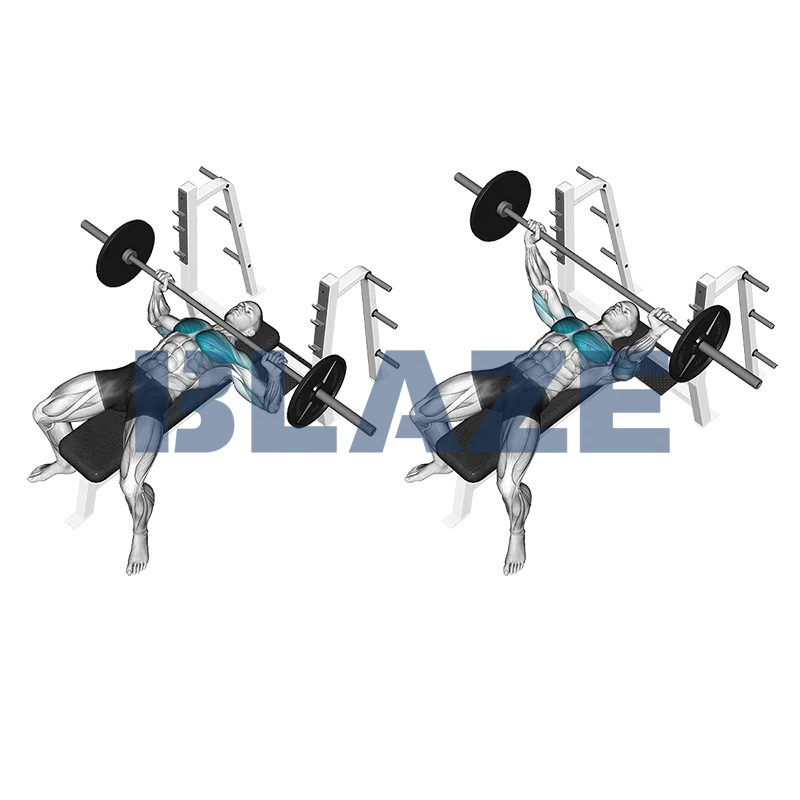
The barbell bench press is a foundational strength-training exercise that offers numerous benefits. It primarily targets the pectoral muscles (chest), deltoids (shoulders), and triceps, promoting upper body strength and hypertrophy. This exercise also engages stabilizing muscles in the back and core, enhancing overall balance and stability. Athletes can profit from the Barbell Bench Press as it increases pushing power, essential for various sports, and improves upper body endurance, contributing to better performance and physical conditioning.
Community Averages
51kg
Avg. weight
112lbs
Avg. weight
* Based on data from the Blaze community
Description
- 1Lie with your back on a flat bench. The bar should be on the level of your eyes.
- 2Place your feet firmly on the ground. Grasp the bar with both hands, your hands should be shoulder-width apart.
- 3Straighten your wrists when holding the barbell. Push the bar upwards until your arms are almost fully extended.
- 4Inhale as you lower the barbell to your chest.
- 5Exhale as you press the barbell back up to the starting position.
- 6You have completed your first repetition. Repeat the motion in a controlled way and count your reps.
Tips & Tricks
- •Arch Your Back: Maintain a slight arch in your lower back to engage your chest muscles more effectively and protect your spine.
- •Foot Placement: Firmly plant your feet on the ground. This stability allows you to generate more power throughout the lift.
- •Grip Width: Use a grip that’s slightly wider than shoulder-width. A narrower grip can put more strain on your shoulders, while a very wide grip can limit your range of motion.
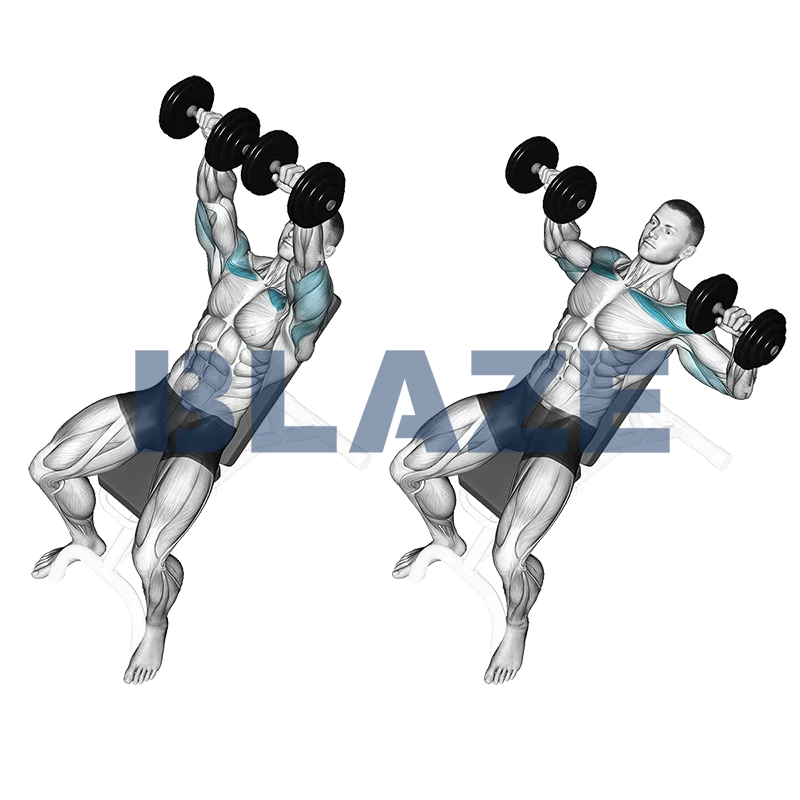
The inclined bench press with dumbbell is a powerful exercise that targets the upper chest, shoulders, and triceps, promoting muscle hypertrophy and strength. Elevating the bench to an incline angle shifts focus to the clavicular head of the pectorals, enhancing upper chest development and improving muscle symmetry. This exercise also activates stabilizing muscles, contributing to overall shoulder stability and functional strength. Athletes benefit from this exercise by gaining increased upper body power and enhanced aesthetics, which are crucial for performance in various sports.
Community Averages
38kg
Avg. weight
83lbs
Avg. weight
* Based on data from the Blaze community
Description
- 1Hold a dumbbell in each hand, sit on a bench inclined at a 45 degrees angle and rest one dumbbell on each knee.
- 2While you lie back on the bench, kick each dumbbell up into position resting on your chest, one at a time.
- 3Position the dumbbells to the sides of your chest and place your feet firmly on the ground.
- 4Exhale as you press the dumbbells upward and inward until your arms are almost fully extended and the dumbbells nearly touch above the center of your face.
- 5Inhale as you slowly lower the dumbbells back to the starting position. For an extra pump, lower the dumbbells beyond the starting position until you feel a slight stretch in your chest.
- 6You have completed your first repetition. Repeat the motion in a controlled way and count your reps.
Tips & Tricks
- •Consistent Angles: Ensure the bench is set at a 30-degree to 45-degree angle. This helps target the upper chest while minimizing strain on the shoulders.
- •Controlled Movement: Lower the dumbbells slowly and with control to maximize muscle engagement and reduce the risk of injury. Avoid letting the weights drop quickly.
- •Elbow Positioning: Keep your elbows at a 45-degree angle to your body. This helps protect your shoulder joints and place more emphasis on the pectoral muscles.
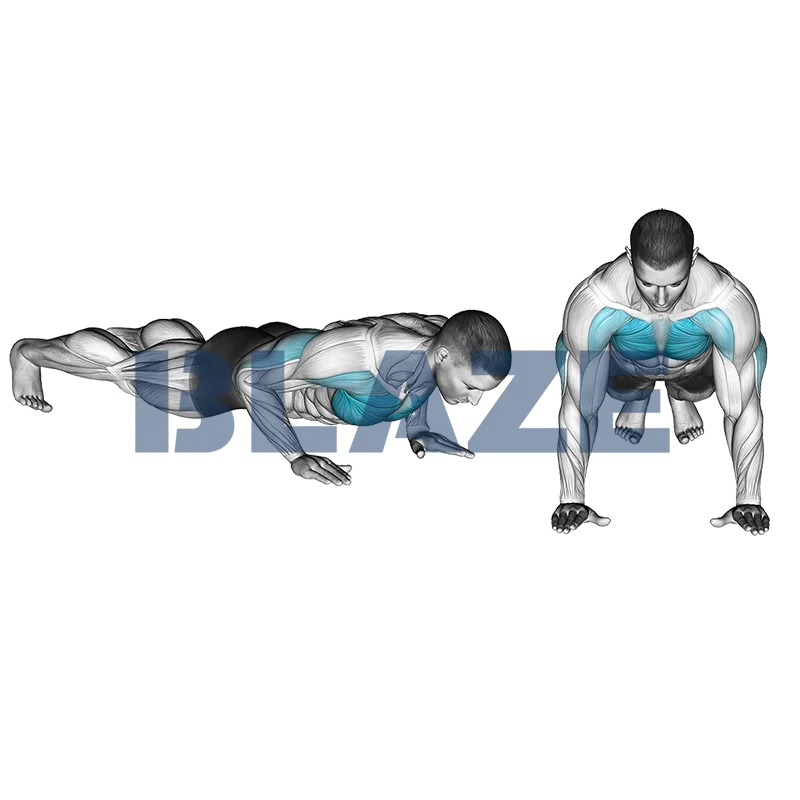
Push ups are a classic full-body exercise offering numerous benefits. They primarily target the pectoral muscles, triceps, and anterior deltoids, while also engaging the core, lower back, and legs for stabilization. This exercise enhances upper body strength, improves muscle tone, and increases endurance. Athletes profit from push-ups due to their simplicity, effectiveness, and lack of equipment requirements. They can boost overall athletic performance by enhancing functional strength, promoting muscle balance, and improving cardiovascular health, essential for various sports disciplines.
Community Averages
15
Avg. reps/set
* Based on data from the Blaze community
Description
- 1Rest your knees, feet and hands on a gym mat.
- 2Extend your feet backward and straighten your whole body so that only your toes and your hands touch the ground. Your hands should be a little bit more than shoulder width apart.
- 3Keep your body straight and your elbows slightly tucked in. This is your starting position.
- 4Inhale as you lower your chest to the floor by bending your elbows.
- 5Then reverse the movement and go back to the starting position. You have completed your first repetition. Repeat the motion in a controlled way and count your reps.
Tips & Tricks
- •Position your hands slightly wider than shoulder-width apart for better stability and muscle engagement.
- •Maintain a straight line from your head to your heels. Avoid sagging your hips or sticking your buttocks up in the air.
- •Engage your core muscles throughout the movement to protect your back and improve strength.
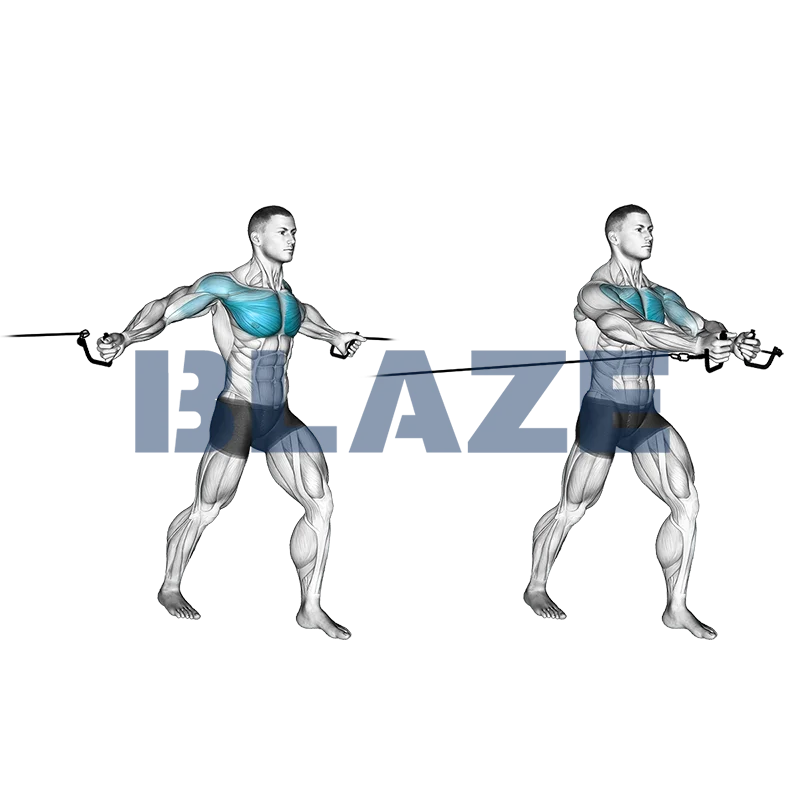
The cable crossover is a versatile exercise effective for developing the pectoral muscles, specifically the upper, middle, and lower chest regions. It also engages the anterior deltoids, triceps, and stabilizing muscles. Benefits include improved chest symmetry, enhanced muscle definition, and increased strength. For athletes, this exercise enhances upper body power, aiding in sports requiring push movements like basketball, football, and martial arts. Moreover, it promotes shoulder stability and functional strength, crucial for overall athletic performance.
Community Averages
40kg
Avg. weight
89lbs
Avg. weight
* Based on data from the Blaze community
Description
- 1Set Up: Stand midway between two pulleys, holding a handle in each hand. Place one foot in front of the other for stability.
- 2Body Position: Bend forward slightly at the hips, keeping your back straight throughout the exercise.
- 3Arm Position: Extend your arms out to your sides with a slight bend at the elbows. Your palms should be facing forward.
- 4Perform the Fly: Exhale as you slowly draw the handles together in an arcing motion until they are positioned in front of your abdomen.
- 5Squeeze and Hold: Hold at the front for a count of two, squeezing your chest muscles.
- 6Return to Start: Inhale as you slowly return the handles to the starting position or until you feel a mild stretch in your chest.
- 7Repeat: Complete the recommended number of repetitions, maintaining proper form throughout.
Tips & Tricks
- •Maintain Proper Form: Ensure your torso is bent forward at the hips throughout the movement. This targets the chest more effectively and alleviates unnecessary strain on your lower back.
- •Control the Movement: Focus on slow, controlled movements both on the contraction and the release. This maximizes muscle engagement and reduces the risk of injury.
- •Adjust Cable Height: Experiment with different cable heights to find which angle activates your chest most. Generally, starting with the pulleys at shoulder height is a good middle ground.
Day 2 Bro Split: Back
4 exercises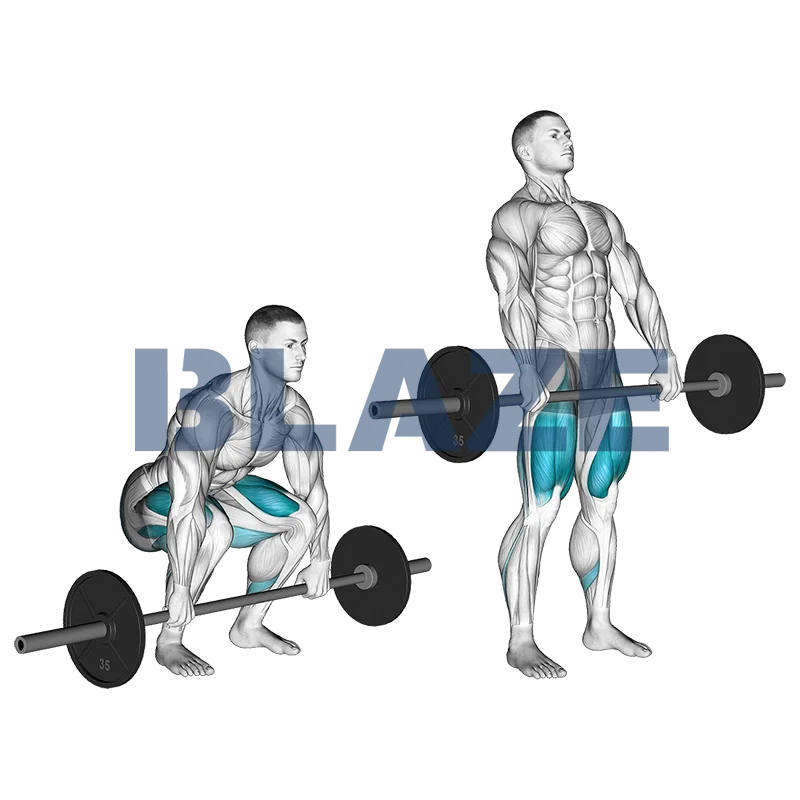
The barbell deadlift is a powerful full-body exercise that offers numerous benefits for athletes. It primarily targets the glutes, hamstrings, lower back, traps, and core. The exercise promotes muscle growth, enhances strength, and improves posture. Additionally, it aids in developing grip strength and increasing power output, vital for athletic performance. By engaging multiple muscle groups, the deadlift supports functional movement patterns, making it an essential exercise for athletes looking to enhance overall strength and conditioning.
Community Averages
64kg
Avg. weight
142lbs
Avg. weight
* Based on data from the Blaze community
Description
- 1Setup: Stand with your feet hip-width apart under the barbell. The bar should be positioned halfway over your feet when you look down.
- 2Grip: Bend down and grasp the barbell with a shoulder-width grip.
- 3Prepare: Take a deep breath, ensuring your torso is upright and your back and arms are straight.
- 4Lift: Stand up by driving with your legs, pulling the bar up the front of your legs.
- 5Top Position: At the top of the lift, squeeze your glutes, pull your shoulders back, and exhale.
- 6Lower:*Push your butt backward and lower the bar down the front of your legs, keeping your back straight.
- 7Finish: Once the bar passes your knees, bend your knees and place the bar back on the floor. Repeat as needed.
Tips & Tricks
- •Engage Your Core: Always keep your core muscles tight to support your spine and maintain good form throughout the lift.
- •Proper Foot Placement: Position your feet hip-width apart with your toes slightly pointing outwards. Make sure the barbell is over the middle of your feet.
- •Grip Tightness: Use a strong overhand grip. If the weight is heavy, consider using a mixed grip (one hand overhand, one hand underhand) or using lifting straps.
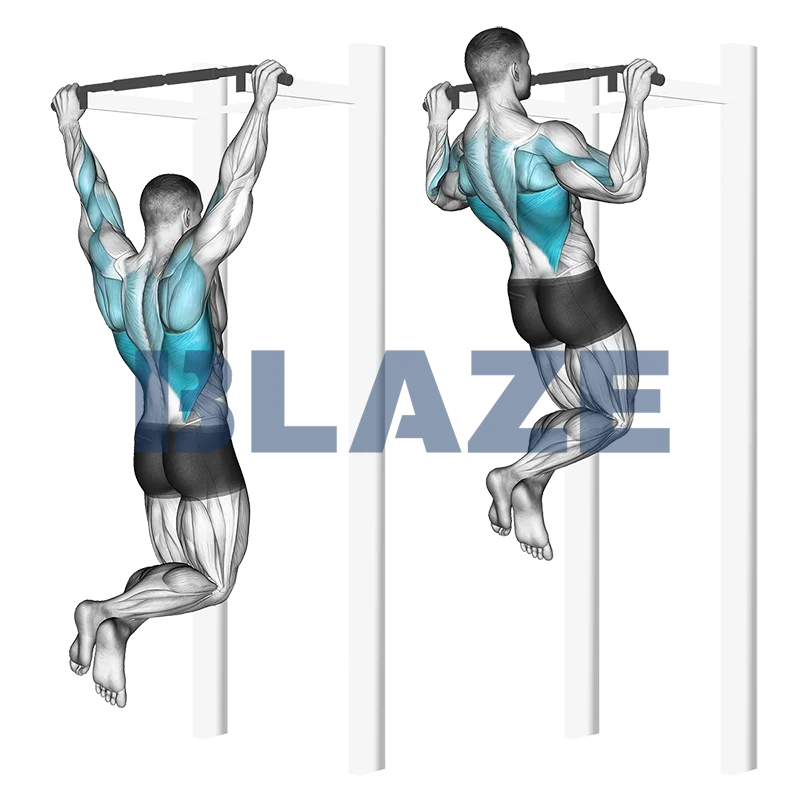
The pull up is a powerful bodyweight exercise that targets various upper body muscles, especially the latissimus dorsi, biceps, and trapezius. It significantly enhances back strength, improves grip, and develops overall upper body muscle endurance. Athletes gain from pull-ups by building functional strength, improving upper body stability, and enhancing performance in sports requiring upper body coordination and power. This exercise also aids in improving posture and spinal alignment, reducing the risk of injuries.
Community Averages
7
Avg. reps/set
* Based on data from the Blaze community
Description
- 1Grasp the bar with a slightly wider than shoulder-width pronated grip.
- 2Hang with your arms and shoulders fully stretched. Your feet must not touch the ground.
- 3Exhale as you pull your whole body up until your chin rises above the bar. Hold for one second.
- 4Inhale as you lower your body until your arms and shoulders are fully stretched and you have reached your starting position.
- 5You have completed your first repetition. Repeat the motion in a controlled way and count your reps.
Tips & Tricks
- •Engage Your Core: Keep your core tight and engaged throughout the exercise to maintain stability and improve form.
- •Full Range of Motion: Aim to bring your chin above the bar and lower yourself until your arms are fully extended. This ensures that you are working your muscles through their entire range.
- •Controlled Movements: Avoid swinging or using momentum. Focus on smooth, controlled movements to maximize engagement of your back and arm muscles.
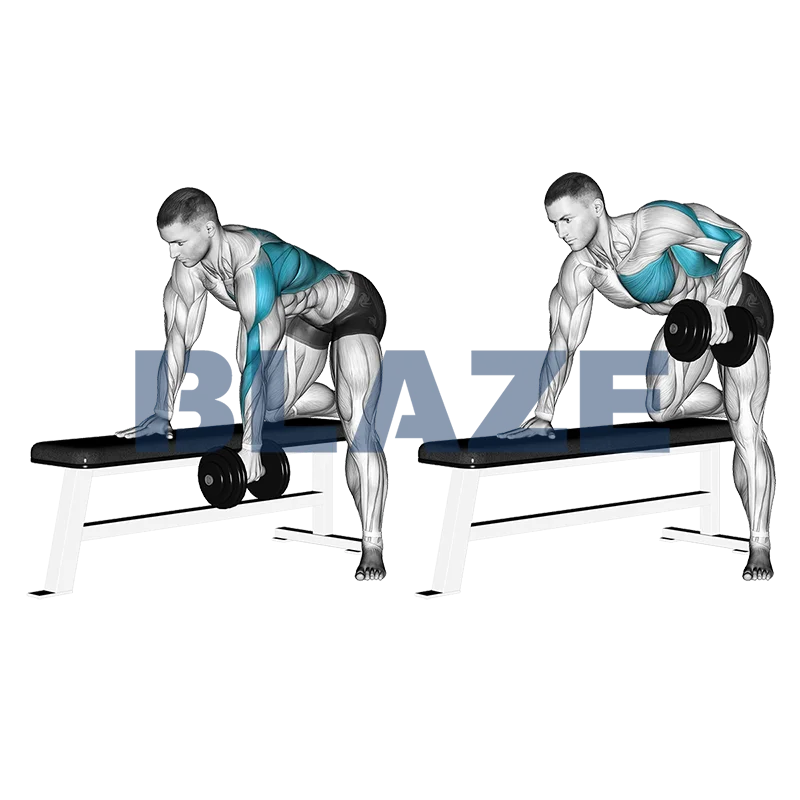
The one arm bent over row with dumbbell is a highly effective exercise for strengthening the upper body. Key benefits include enhanced muscle development, improved posture, and increased arm and back strength. This exercise primarily targets the latissimus dorsi, trapezius, rhomboids, and biceps, making it excellent for comprehensive upper body conditioning. Athletes can profit from this exercise by improving their pulling strength, which is critical in sports requiring upper body power and stability, and enhancing overall athletic performance through better muscle coordination and endurance.
Community Averages
16kg
Avg. weight
35lbs
Avg. weight
* Based on data from the Blaze community
Description
- 1Holding a dumbbell in your left hand, kneel on a bench with your right knee and support your body with your right arm.
- 2Ensure that the dumbbell is hanging straight down, with your left arm almost fully extended.
- 3Exhale as you pull the dumbbell up to the side of your waist.
- 4Hold the dumbbell in that position for a count of two.
- 5Inhale as you lower the dumbbell back down to the starting position.
- 6Repeat the exercise for the desired number of repetitions.
- 7Switch to your right arm and repeat the steps above.
Tips & Tricks
- •Maintain a Neutral Spine: Keep your back straight and avoid rounding your shoulders. This promotes better engagement of the back muscles and reduces the risk of injury.
- •Engage Your Core: Tighten your core muscles to help stabilize your torso. This not only protects your lower back but also ensures that the focus remains on the target muscles.
- •Control the Weight: Avoid using momentum to lift the weight. Focus on a slow, controlled motion, especially during the lowering phase of the movement. This increases muscle activation.
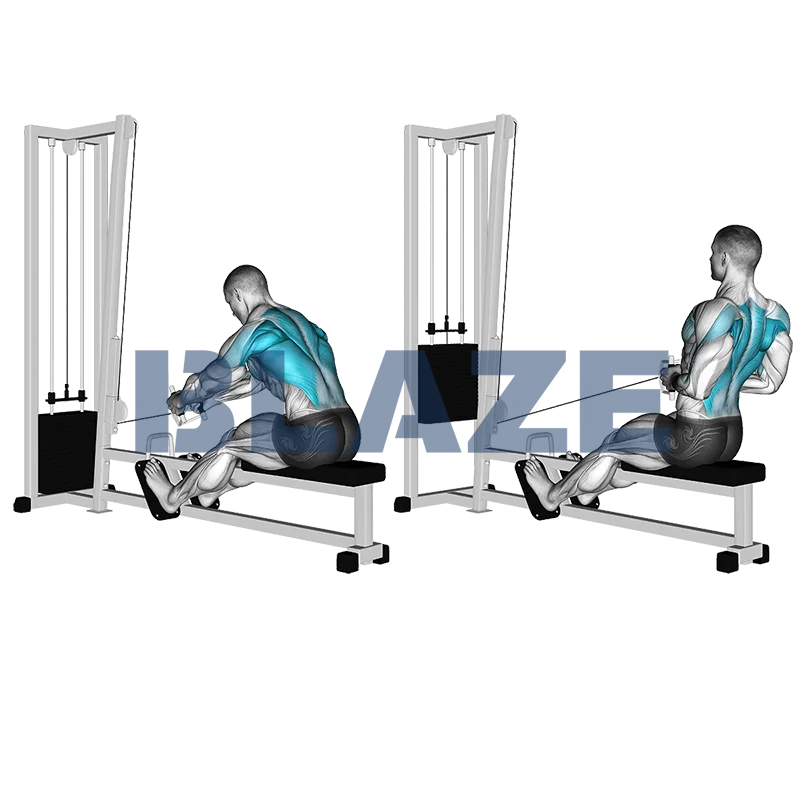
The cable seated row is a strength training exercise that primarily targets the back muscles, specifically the latissimus dorsi, rhomboids, and trapezius. It also engages the biceps and forearms. This exercise is highly beneficial for improving posture, enhancing upper-body strength, and stabilizing the core. Athletes can profit from the Cable Seated Row as it increases pulling power, crucial for sports like climbing, swimming, and rowing. Improved back strength aids in overall athletic performance and injury prevention by ensuring balanced muscle development.
Community Averages
52kg
Avg. weight
114lbs
Avg. weight
* Based on data from the Blaze community
Description
- 1Sit facing the cable row machine and place your feet securely on the foot rests.
- 2Grasp the double-row bar with both hands, then slide your bottom backward until your knees are nearly straight.
- 3Lean your torso forward and allow your arms and shoulders to stretch forward.
- 4Exhale as you lean backward, straighten your back, and pull the v-bar toward your abdomen, keeping your elbows close to your body.
- 5At the top of the movement, pull your shoulders back, stick out your chest, and squeeze your back muscles. Hold for a count of two.
- 6Inhale as you slowly lean forward and return the double-row bar to the starting position, stretching your arms and shoulders forward.
- 7Repeat for the recommended number of repetitions.
Tips & Tricks
- •Maintain Proper Posture: Keep your back straight and avoid rounding your shoulders to prevent injuries and maximize muscle engagement.
- •Controlled Movements: Perform the exercise in a slow and controlled manner to ensure you engage your muscles properly and reduce the risk of injury.
- •Grip Variation: Experiment with different grips, such as a wide grip, narrow grip, or underhand grip, to target different parts of your back muscles.
Day 3 Bro Split: Shoulders and Traps
5 exercises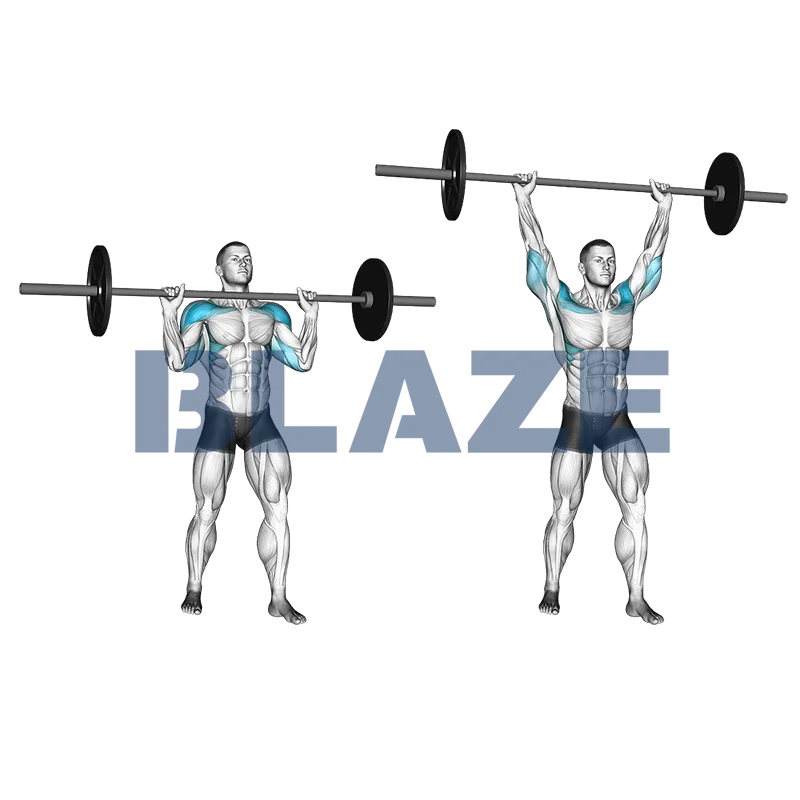
The standing military press (with barbell) is an effective compound exercise ideal for developing upper body strength. Key benefits include enhanced shoulder muscle hypertrophy, improved core stability, and better lifting performance. This exercise primarily targets the deltoids, triceps, and upper pectorals while also engaging the core for stabilization. Athletes profit from the Standing Military Press due to its functional strength gains, which translate into improved performance in various sports activities and daily tasks requiring upper body power and coordination.
Community Averages
33kg
Avg. weight
72lbs
Avg. weight
* Based on data from the Blaze community
Description
- 1Set up a barbell on a squat rack at chest height. Select appropriate weights.
- 2Stand under the bar and grasp it with a pronated grip, wider than shoulder-width apart.
- 3Slightly bend your knees and position the barbell on your collarbone.
- 4Lift the barbell to rest on your chest, then step back and position your feet shoulder-width apart.
- 5Press the barbell overhead by extending your arms until they are locked, with the bar slightly in front of your head.
- 6Lower the barbell to your collarbone slowly while inhaling.
- 7Press the barbell back up to the starting position as you exhale.
- 8Repeat for the recommended number of repetitions.
Tips & Tricks
- •Engage Your Core: Tighten your core muscles throughout the movement to maintain stability and support your lower back. This prevents excessive arching and potential injury.
- •Grip Width: Ensure your grip is slightly wider than shoulder-width. This helps in better activation of the shoulder muscles and improves the range of motion.
- •Wrist Alignment: Keep your wrists straight and in line with your forearms to avoid unnecessary strain and reduce the risk of injury.
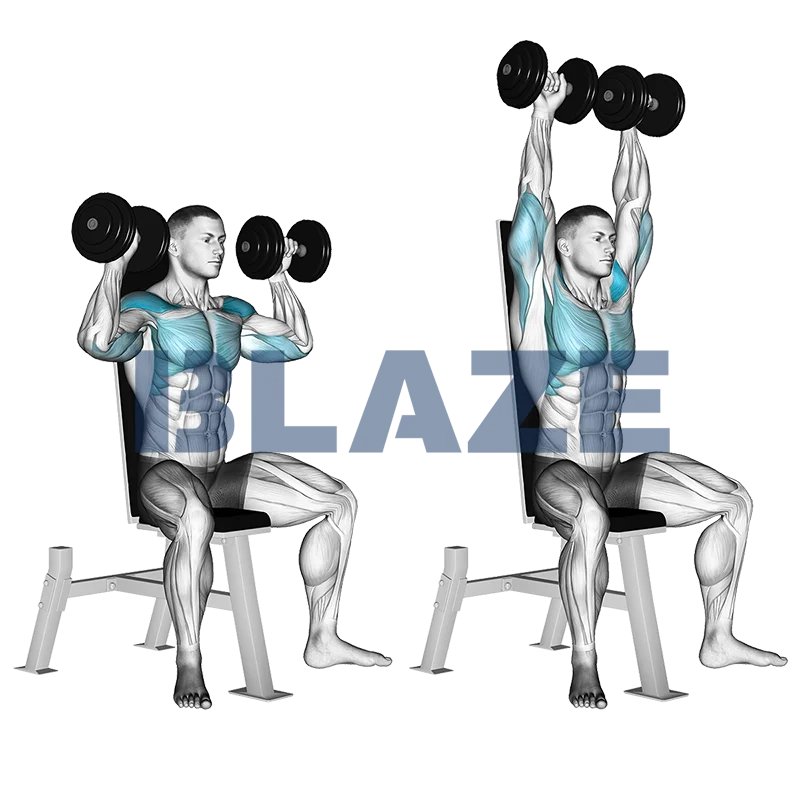
The dumbbell seated shoulder press offers numerous benefits, including enhanced shoulder strength, improved upper body stability, and increased muscle mass. This exercise primarily targets the deltoids, triceps, and upper pectorals, while also engaging the core for stabilization. Athletes profit from this exercise as it translates to greater shoulder endurance and power, critical for performance in sports like swimming, basketball, and baseball. It's also effective for achieving balanced muscle development and reducing the risk of shoulder injuries.
Community Averages
29kg
Avg. weight
64lbs
Avg. weight
* Based on data from the Blaze community
Description
- 1Stand up straight and hold a barbell with a shoulder-width supinated grip (palms facing upward). Your arms should be almost fully extended and the barbell should rest against your thighs.
- 2Keep your body still. Exhale as you curl the barbell up towards your shoulders until your elbows are fully flexed.
- 3Allow your elbows to move forward slightly (shoulder flexion) until your forearms are vertical.
- 4Hold this position for a count of two while squeezing your biceps.
- 5Inhale as you slowly lower the barbell back to the starting position, keeping control of the movement.
- 6Repeat the exercise for the recommended number of repetitions.
Tips & Tricks
- •Stabilize Your Core: Engage your core muscles throughout the exercise to maintain proper form and prevent lower back strain.
- •Controlled Movements: Avoid using momentum. Lift and lower the dumbbells in a controlled manner to maximize muscle engagement and minimize risks of injury.
- •Avoid Locking Elbows: When you reach the top of the press, do not lock your elbows. Keeping a slight bend protects your joints and keeps tension on the muscles.
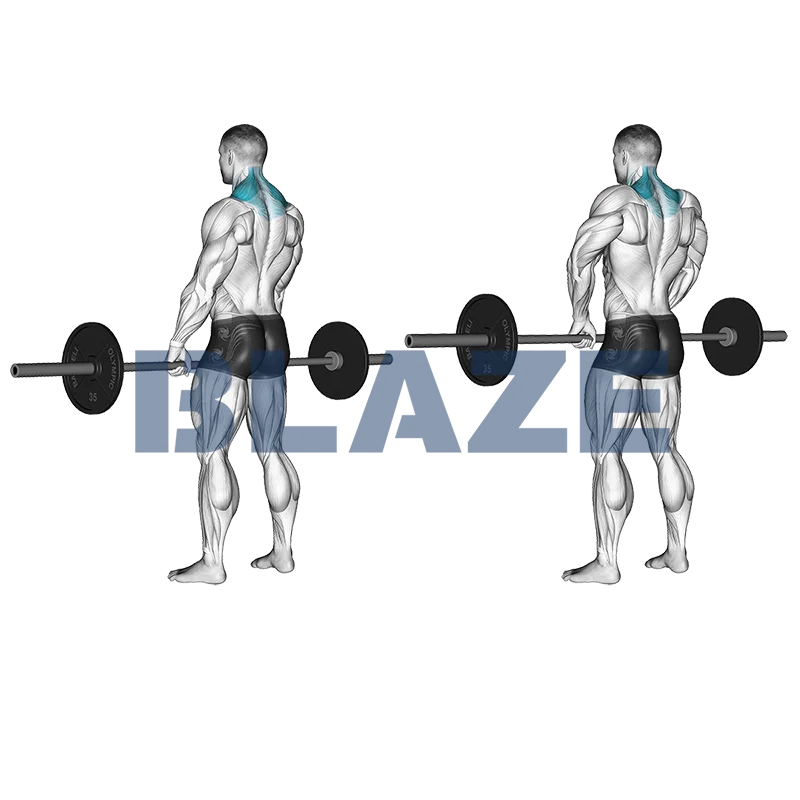
The barbell shrug is an effective exercise primarily targeting the trapezius muscles, while also engaging the deltoids and upper back. Performing this exercise can enhance shoulder strength, improve posture, and reduce the risk of injuries by fortifying the muscles that stabilize the upper body. Athletes can benefit from the Barbell Shrug as it bolsters performance in sports requiring strong shoulder and neck muscles, such as weightlifting, swimming, and basketball. This exercise increases muscle mass and endurance in the traps, contributing to overall upper body power.
Community Averages
59kg
Avg. weight
130lbs
Avg. weight
* Based on data from the Blaze community
Description
- 1Stand with your feet shoulder-width apart, gripping a barbell with a shoulder-width pronated grip (palms facing your body).
- 2Keep your back straight and core engaged to maintain good posture throughout the exercise.
- 3Exhale as you slowly lift your shoulders straight up towards your ears, raising the barbell.
- 4At the peak of the movement, hold for a count of two and squeeze your trapezius muscles.
- 5Inhale as you slowly lower your shoulders and the barbell back down to the starting position.
- 6Repeat the movement for the desired number of repetitions.
Tips & Tricks
- •Grip Width: Use a grip that is slightly wider than shoulder-width to ensure balance and stability.
- •Neck Position: Keep your neck in a neutral position; do not crane your head forward or look up.
- •Shoulder Movement: Focus on moving your shoulders straight up and down. Avoid rolling them forward or backward.
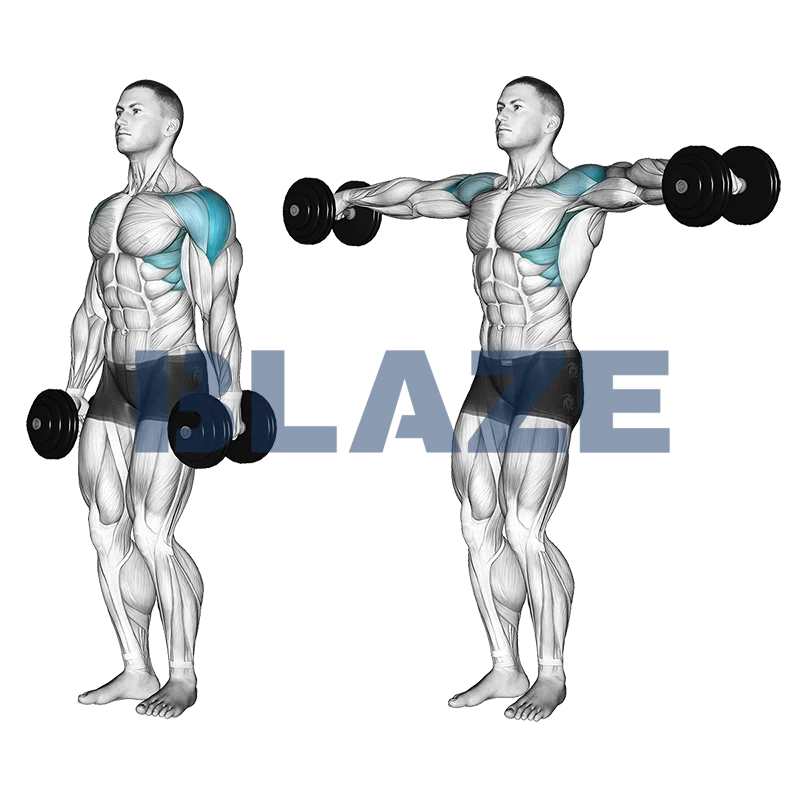
The dumbbell lateral raise primarily targets the lateral deltoids, providing definition and strength to the shoulders. Additionally, it involves the anterior deltoids, trapezius, and rotator cuff muscles. Benefits include enhanced shoulder width, improved posture, and better shoulder stability, crucial for athletic performance. Athletes profit from this exercise as it contributes to stronger and more balanced shoulder muscles, reducing the risk of injuries and improving overall upper body strength and aesthetics. It's an essential move for building a robust shoulder profile and enhancing athletic capabilities.
Community Averages
16kg
Avg. weight
34lbs
Avg. weight
* Based on data from the Blaze community
Description
- 1Stand upright and hold a dumbbell in each hand with the dumbbells hanging down by your sides. Keep your elbows slightly bent during the whole exercise.
- 2Exhale as you raise both arms to the sides until your arms form one line with your shoulders.Inhale and lower the dumbbells into the starting position.
- 3You have completed your first repetition. Repeat the motion in a controlled way and count your reps.
Tips & Tricks
- •Maintain Proper Form: Keep a slight bend in your elbows to reduce the strain on your elbow joints. This will help maintain tension in your shoulder muscles.
- •Neutral Wrist Position: Keep your wrists in a neutral position-avoid letting them bend forward or backward. This helps to protect your wrists and ensure that the focus remains on your shoulders.
- •Controlled Movement: Lift and lower the dumbbells slowly and with control. Avoid using momentum to lift the weights, which can reduce the effectiveness of the exercise and increase the risk of injury.
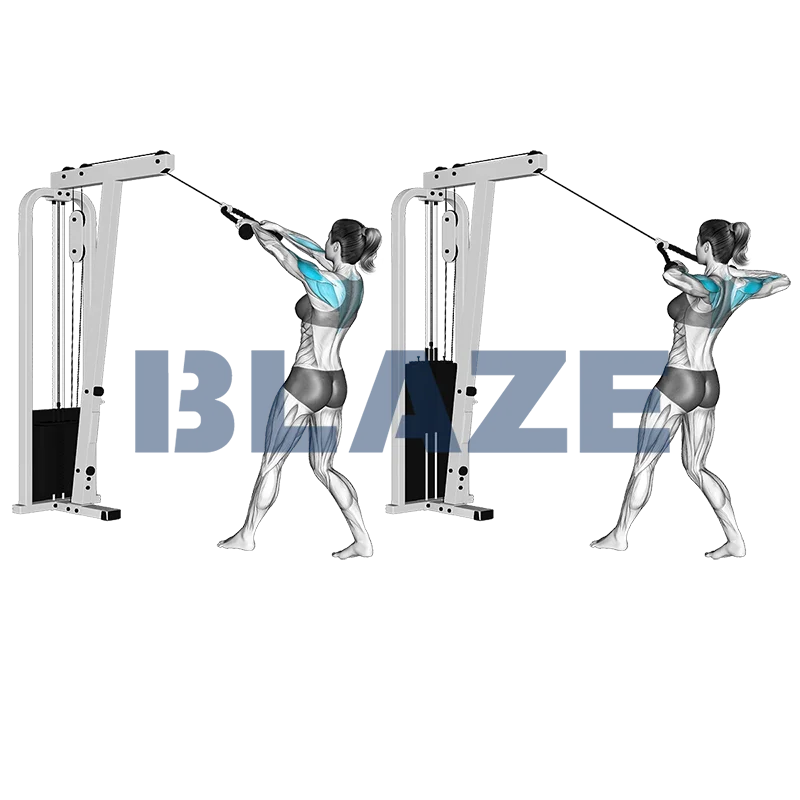
The standing face pull with cable is a highly beneficial exercise that targets the rear deltoids, upper traps, rhomboids, and rotator cuff muscles. By emphasizing these muscle groups, it promotes improved shoulder stability, posture, and overall upper body strength. Athletes benefit from this exercise through enhanced scapular mobility and reduced injury risk, crucial for sports requiring arm and shoulder movements. Consistent practice of face pulls supports better athletic performance by bolstering shoulder health and functional strength, making it an essential addition to any training regimen.
Community Averages
29kg
Avg. weight
64lbs
Avg. weight
* Based on data from the Blaze community
Description
- 1Stand in front of a pulley set at head height, with the rope attachment in each hand, using an underhand grip.
- 2Step back to create tension in the rope and extend your arms in front of you. Assume a staggered stance for better balance.
- 3Exhale and pull the rope towards your forehead. Rotate your shoulders as the rope nears your face, creating a double biceps pose.
- 4Hold for two counts.
- 5Inhale as you slowly return to the starting position.
- 6Repeat the exercise.
Tips & Tricks
- •Use a Rope Attachment: Ensure you use a rope attachment with a cable pulley system for better grip and control. Using the rope allows you to pull the handles apart at the end of the movement, engaging your rear delts and upper back muscles more effectively.
- •Set the Pulley at Upper-Chest Height: Adjust the pulley so it's at the height of your upper chest or nose. This ensures you work the right muscle groups and maintain proper form throughout the exercise.
- •Maintain a Stable Stance: Stand with your feet shoulder-width apart and engage your core. This helps you maintain balance and prevents your lower back from compensating during the pull.
Day 4 Bro Split: Legs and Apps
6 exercises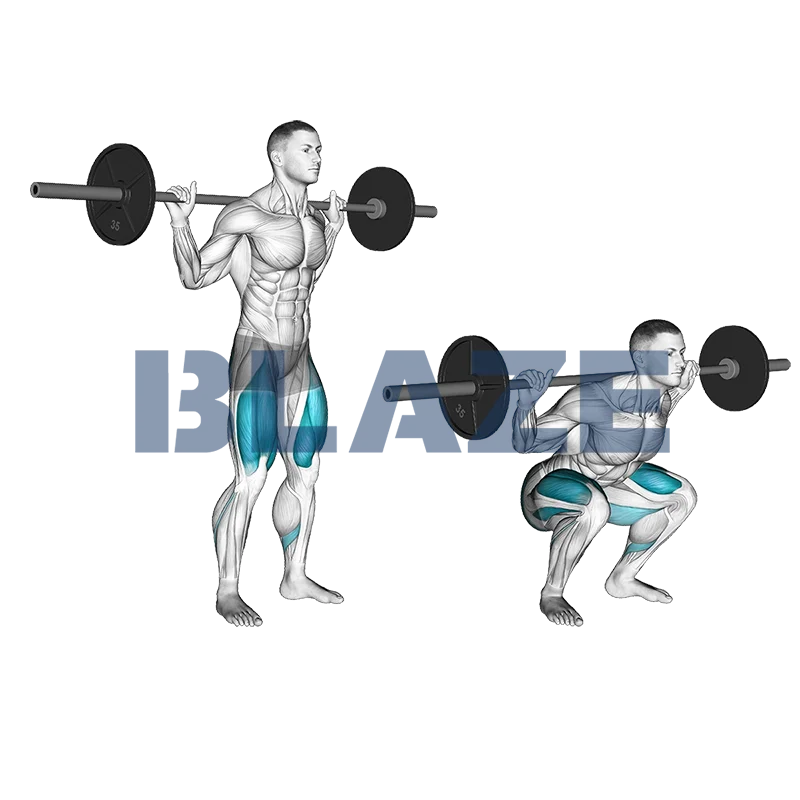
The barbell squat is a foundational exercise that offers multiple benefits, including improved strength, power, and muscle mass. Key muscle groups activated during this exercise include the quadriceps, hamstrings, glutes, and lower back. For athletes, incorporating barbell squats can enhance performance by promoting better balance, agility, and explosiveness, which are crucial for sports like football, basketball, and track. Additionally, squats improve core stability and support injury prevention by strengthening connective tissues and joints.
Community Averages
55kg
Avg. weight
122lbs
Avg. weight
* Based on data from the Blaze community
Description
- 1Load a barbell on a rack at upper-chest level. Step under the barbell so that it rests on the back of your shoulders, and grasp the bar at each side. Hands are slightly wider than shoulder-width apart.
- 2Dismount the barbell and step backward. Your feet should be shoulder-width apart and must slightly point outwards.
- 3Inhale as you squat down by simultaneously pushing the hips back and bending your knees and hips to lower the torso. Keep your torso upright, and descend at least until your knees are bent at a 90-degree angle.
- 4Be careful that your knees do not extend beyond an imaginary line drawn vertically upward from your toes. Instead, push your butt backwards to avoid this.
- 5Exhale as you push your body back up to the starting position, still keeping your torso upright.
- 6You have completed your first repetition. Repeat the motion in a controlled way and count your reps.
Tips & Tricks
- •Warm-Up Thoroughly: Always start with a comprehensive warm-up to prepare your muscles and joints. This can include dynamic stretches and light cardio to get your blood flowing.
- •Head Position: Keep your head facing forward and eyes fixed on a point in front of you. This helps maintain balance and keeps your spine aligned.
- •Chest Up: Ensure your chest is up and your back is neutral throughout the movement. Avoid rounding your back to prevent spinal injuries.
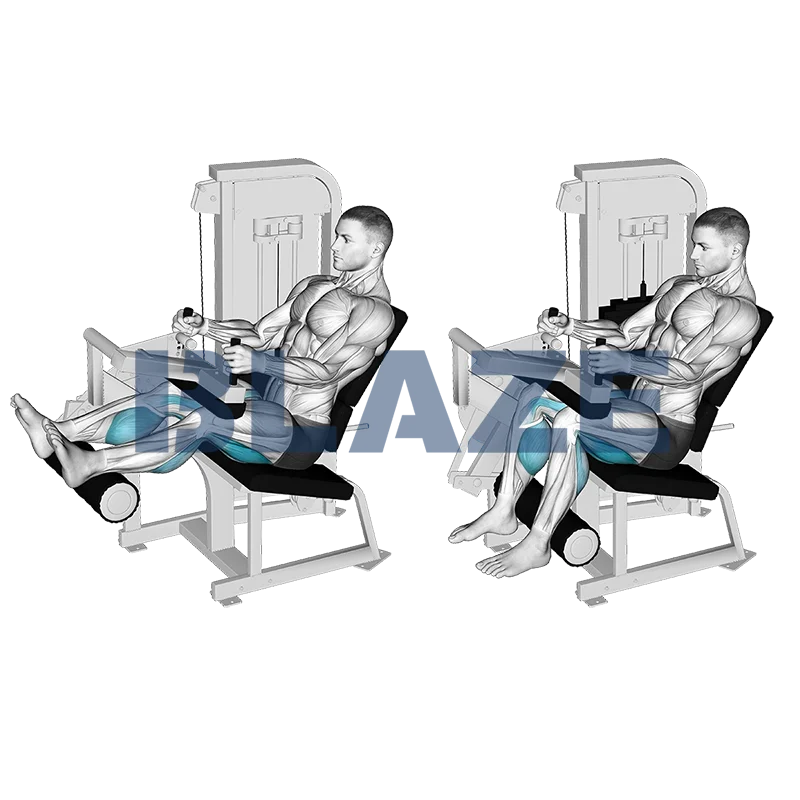
The machine seated leg curl is a highly effective exercise focusing primarily on the hamstrings, with secondary activation of the calf muscles. This exercise is pivotal for athletes as it enhances lower body strength, contributes to muscle balance, and reduces the risk of injury. Efficiently targeting the hamstrings, it aids in improved sprinting speed, jumping ability, and overall leg endurance. The machine's controlled motion ensures proper form, making it suitable for both beginners and advanced athletes aiming to optimize their performance and athletic capabilities.
Community Averages
43kg
Avg. weight
94lbs
Avg. weight
* Based on data from the Blaze community
Description
- 1Adjust the Machine: Ensure the machine’s pads are set up so they sit comfortably against your lower back when seated.
- 2Position Your Legs: Place your legs on the padded lever so it rests just below your calf muscles.
- 3Secure the Lap Pad: Adjust the lap pad so it sits securely on your thighs, just above the knees.
- 4Lift and Grip: Straighten your legs out in front of you and grasp the side handles of the machine.
- 5Execute the Movement: Pull the padded lever down and back towards you using your legs as far as you can.
- 6Hold and Return: Hold the position for a second, then slowly return the lever back to the starting position.
- 7Repeat the movement in a controlled manner for your desired number of repetitions.
Tips & Tricks
- •Ensure the pad is adjusted to rest comfortably against the back of your lower legs just above the ankles. This helps in maximizing the range of motion.
- •Breathe out as you curl the weight towards you and breathe in as you slowly return to the starting position. Controlled breathing can enhance your focus and performance.
- •Perform each repetition through a full range of motion to effectively target your hamstrings. Avoid partial reps to prevent muscle imbalances.
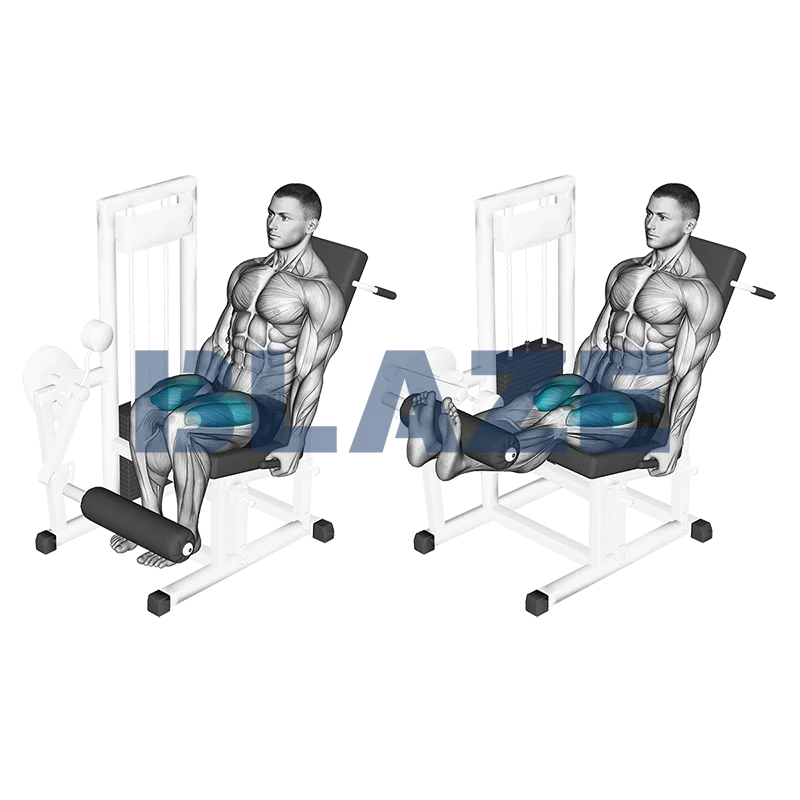
The machine leg extension is a strength training exercise targeting the quadriceps, primarily engaging the rectus femoris, vastus lateralis, vastus medialis, and vastus intermedius. This exercise isolates the quads, allowing for focused muscle development, improved knee extension strength, and enhanced overall leg definition. Athletes benefit from increased power and stability in activities requiring leg strength, such as running, jumping, and cycling. Additionally, strong quadriceps support knee joint health, reducing injury risk and improving athletic performance.
Community Averages
51kg
Avg. weight
112lbs
Avg. weight
* Based on data from the Blaze community
Description
- 1Sit on the leg extension machine. Adjust the weight. The backs of your thighs should fully rest on the seat and your back should be fully supported by the back rest.
- 2Lock your feet under the foot pads of the lever with the pads resting slightly above your ankles. Grasp the side handles for support.
- 3Exhale as you lift the foot pad forward and upward until your legs are fully extended.
- 4Hold there for one second and then inhale as you return to the starting position.You have completed your first repetition. Repeat the motion in a controlled way and count your reps.
Tips & Tricks
- •Make sure the machine is properly adjusted to fit your body. The axis of rotation of the machine should align with your knee joint to avoid unnecessary strain.
- •Keep your back firmly against the seat and avoid arching it.
- •Grip the handles to stabilize your upper body and prevent leveraging off the machine.
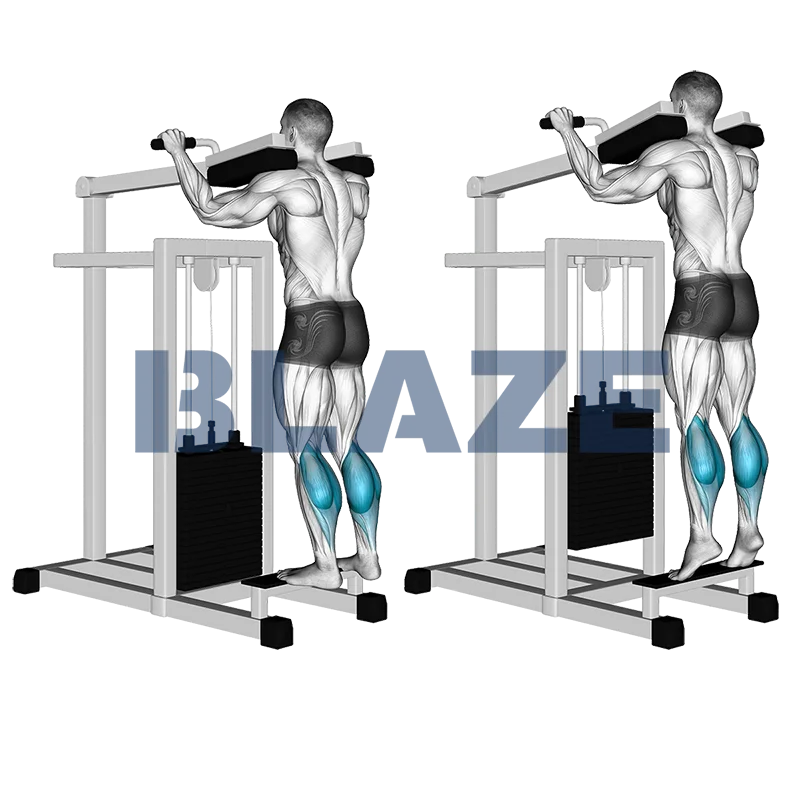
The machine standing calf raise is a powerful exercise focusing on the calf muscles, specifically targeting the gastrocnemius and soleus. This movement strengthens and stabilizes the lower legs, crucial for improved balance and athletic performance. Athletes benefit from enhanced propulsion, reduced injury risk, and better agility. By engaging the calves, the exercise indirectly supports stronger ankle joints, contributing to overall lower body strength and endurance. Ideal for runners, jumpers, and those in need of explosive leg power, this exercise is a must for athletic development.
Community Averages
60kg
Avg. weight
132lbs
Avg. weight
* Based on data from the Blaze community
Description
- 1Stand on the calf raise machine with the levers resting on your shoulders.
- 2Position the balls of your feet on the platform, with the arches and heels of your feet extending off the platform.
- 3Grasp the handles for support.
- 4Exhale as you raise your heels by using your calf muscles and push the shoulder levers up as far as possible. Hold in this position for one second.
- 5Inhale as you lower the levers until you feel a slight stretch in your calves. Keep your body straight during the whole motion.
- 6You have completed your first repetition. Repeat the motion in a controlled way and count your reps.
Tips & Tricks
- •Full Range of Motion: Ensure you achieve a full range of motion by lowering your heels as far as possible and then extending fully onto your toes. This will maximize muscle engagement and effectiveness.
- •Controlled Movement: Focus on controlled movements rather than bouncing. Keep the motion slow and deliberate to engage the calf muscles completely and avoid injury.
- •Proper Foot Positioning: Position your feet parallel and shoulder-width apart on the platform. This helps distribute the weight evenly and targets the calves effectively.
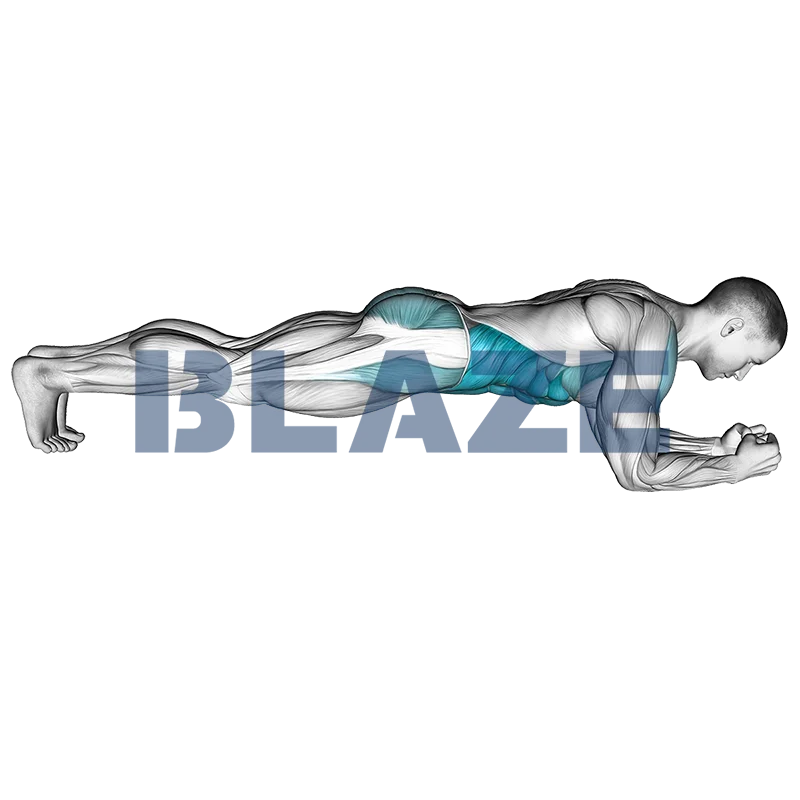
The front plank is a fundamental core exercise offering numerous benefits. Engaging the abdominals, lower back, glutes, hips, and shoulders, it enhances stability and strength in the core region. This exercise is crucial for athletes as it improves posture, reduces the risk of back injuries, and enhances overall athletic performance by providing a solid foundation for movement. Planks also bolster body awareness and coordination, essential for maintaining proper form and efficiency in various sports and physical activities.
Community Averages
0:01:15
Avg. duration
* Based on data from the Blaze community
Description
- 1Rest your knees, feet and elbows on a gym mat.
- 2Extend your feet backward and straighten your whole body so that only your toes and your elbows touch the ground. Your feet should be close together and your elbows should be positioned directly under your shoulders.
- 3Make sure that your lower back sags or your butt rises. Instead, ensure that your body is straight and rigid. Your core muscles must be contracted during the whole exercise.
- 4Hold this position for the desired period of time.
- 5Then go back to the starting position to rest. You have completed your first repetition.
Tips & Tricks
- •Maintain Proper Alignment: Make sure your body forms a straight line from your shoulders to your heels. Avoid letting your hips sag or rise too high.
- •Engage Your Core: Tighten your abdominal muscles as if bracing for a punch. This helps to stabilize your spine and maintain proper form.
- •Avoid Neck Strain: Keep your neck in line with your spine by looking at a spot on the floor just a few inches in front of your hands.
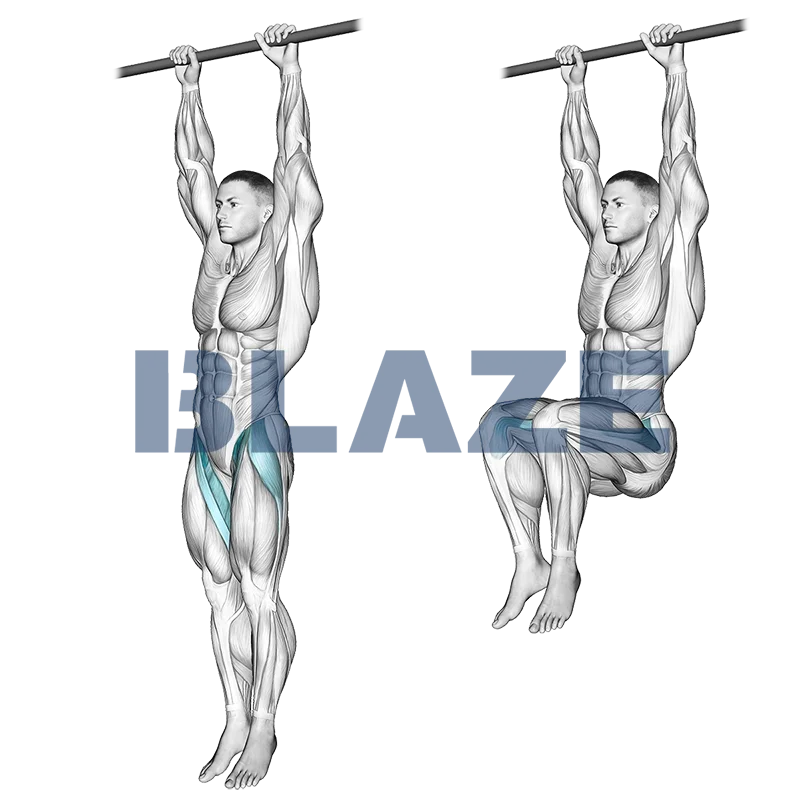
The hanging leg and hip raise is a potent exercise for developing core strength and stability. This movement primarily targets the lower abdominal muscles, hip flexors, and obliques, while also engaging the upper body, including shoulders and grip muscles for stabilization. Its dynamic nature improves overall core conditioning and functional strength. Athletes benefit from enhanced midsection endurance and injury prevention, crucial for performance in sports requiring rotational power, stability, or agility. This exercise aids in sculpting a stronger, more resilient core, benefiting athletic performance and daily activities.
Community Averages
12
Avg. reps/set
* Based on data from the Blaze community
Description
- 1Hang from a bar using a shoulder-width pronated grip. Your feet must not touch the ground.
- 2Straighten your lower back and try not to arch your back.
- 3Exhale as you slowly raise your knees until your thighs form a 90 degree angle with your calves. Keep your body still and legs together during the motion.
- 4Inhale as you slowly lower your knees to the starting position.
- 5You have completed your first repetition. Repeat the motion in a controlled way and count your reps.
Tips & Tricks
- •Grip Strength: Ensure your grip is secure on the bar. If grip strength is an issue, consider using lifting straps to maintain your hold.
- •Controlled Movements: Perform the exercise in a slow and controlled manner. Focus on using your abdominal muscles to lift your knees, not just swinging your legs.
- •Engage Core: Keep your core tight throughout the movement. Engaging your core will help maintain stability and improve effectiveness.
Day 5 Bro Split: Biceps and Triceps
6 exercises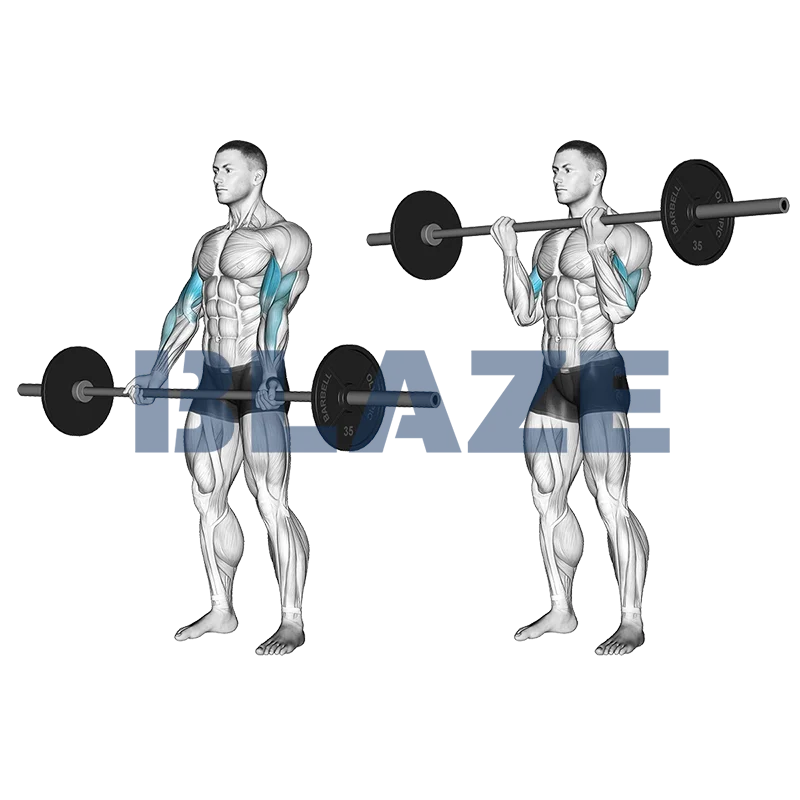
Barbell curls are a prime exercise for enhancing bicep strength and muscle size, primarily targeting the biceps brachii, brachialis, and brachioradialis. This movement additionally engages the forearms and shoulders to a lesser extent. Athletes benefit significantly from barbell curls as they improve upper arm endurance and grip strength, which are crucial for various sports activities. Consistent practice of barbell curls can lead to better lifting performance, enhanced arm aesthetics, and increased functional strength, making it a vital addition to any strength training regimen.
Community Averages
25kg
Avg. weight
55lbs
Avg. weight
* Based on data from the Blaze community
Description
- 1Stand up straight, holding a barbell with a shoulder-width supinated grip (palms facing upward). Your arms should be almost fully extended, and the barbell should rest against your thighs.
- 2Keep your body still and exhale as you curl the barbell up towards your shoulders until your elbows are fully flexed.
- 3Once your elbows are fully flexed, allow them to move forward slightly, just until your forearms are vertical.
- 4Hold this position for a count of two and squeeze your biceps.
- 5Inhale as you slowly lower the barbell back to the starting position.
- 6Repeat for the recommended number of reps.
Tips & Tricks
- •Stand with feet shoulder-width apart.
- •Keep your back straight and chest up.
- •Avoid swaying or leaning backward as you lift; this ensures that your biceps do the work, not your back.
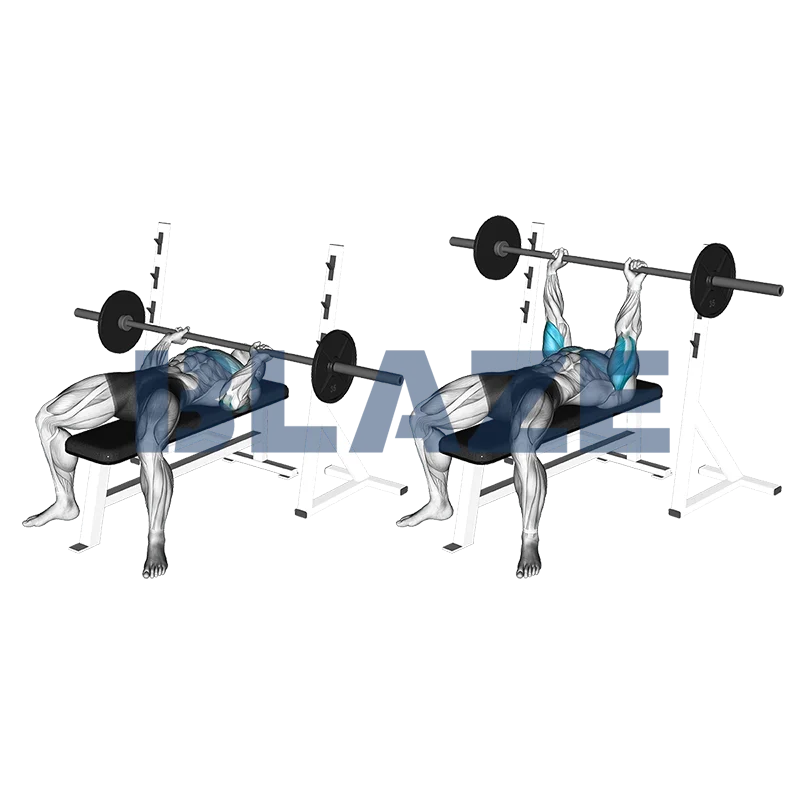
The barbell close grip bench press is a powerful upper body exercise that targets the triceps, with secondary activation of the chest and shoulders. By narrowing the grip, the focus shifts to the triceps, enhancing their strength and size. This exercise also engages the chest and front deltoids, supporting overall upper body muscle development. Athletes benefit by building arm strength, improving pressing power, and enhancing muscle endurance. Ideal for upper body strength and functional arm mechanics, it’s a valuable addition to any training regime.
Community Averages
54kg
Avg. weight
118lbs
Avg. weight
* Based on data from the Blaze community
Description
- 1Lie with your back on a flat bench. The bar should be on the level of your eyes.
- 2Place your feet firmly on the ground. Grasp the bar with both hands, your hands should be less than shoulder-width apart.
- 3Straighten your wrists when holding the barbell. Push the bar upwards until your arms are almost fully extended.
- 4Inhale as you lower the barbell to your chest.
- 5Exhale as you press the barbell back up to the starting position.
- 6You have completed your first repetition. Repeat the motion in a controlled way and count your reps.
Tips & Tricks
- •Grip Width: Ensure your grip is narrow but not too close. Aim for a hand position where your arms maintain a vertical alignment or your forearms are slightly tilted inwards when the bar is lowered to your chest. Typically, this is shoulder-width apart or slightly closer.
- •Elbow Position: Keep your elbows close to your body throughout the movement. This helps target your triceps more effectively and reduces stress on your shoulders.
- •Controlled Movement: Maintain control over the barbell throughout the exercise. Lower the bar slowly to your chest and press it back up with a steady and controlled motion. Avoid bouncing the bar off your chest.
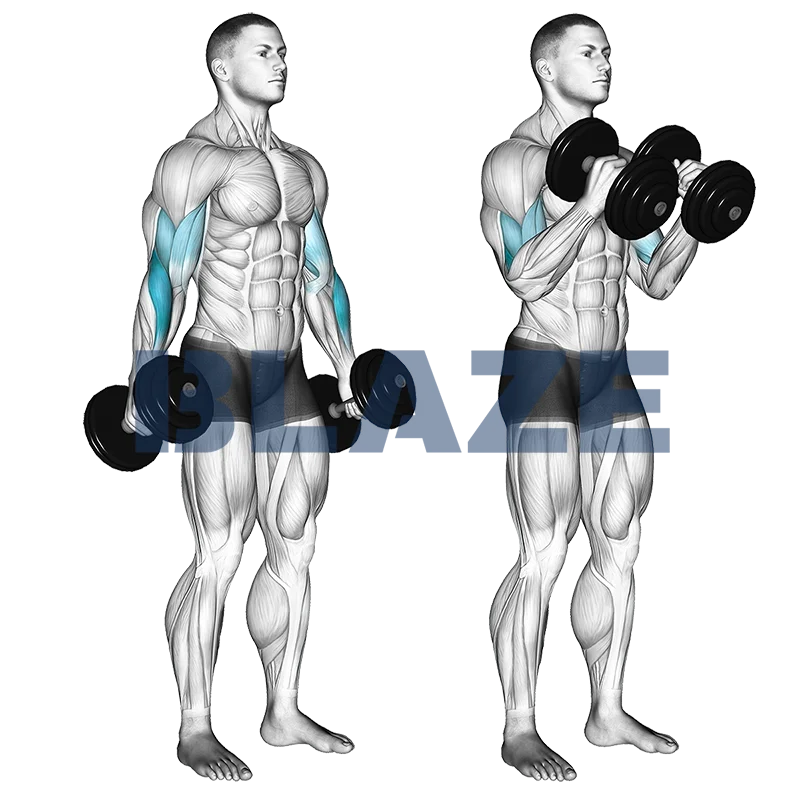
The dumbbell hammer curl is a versatile strength training exercise that primarily targets the brachialis, brachioradialis, and biceps brachii muscles. By maintaining a neutral grip throughout the movement, this exercise effectively isolates the forearm and upper arm muscles, promoting balanced development and increased overall arm strength. Athletes benefit from enhanced grip strength and improved performance in sports requiring arm and hand power. Additionally, this exercise supports injury prevention by fortifying the muscles and tendons surrounding the elbow joint. Ideal for boosting arm functionality and aesthetics.
Community Averages
24kg
Avg. weight
54lbs
Avg. weight
* Based on data from the Blaze community
Description
- 1Stand with your feet shoulder-width apart, holding a dumbbell in each hand using a neutral grip (palms facing in).
- 2Keep your elbows by your sides throughout the exercise.
- 3Exhale as you curl one dumbbell up towards your shoulder, contracting your biceps fully.
- 4Hold for two seconds and squeeze your biceps.
- 5Inhale as you slowly lower the dumbbell back to the starting position.
- 6Repeat the movement with your opposite arm.
- 7Keep alternating arms for the desired number of repetitions.
- 8Remember to breathe throughout the exercise and maintain proper form.
Tips & Tricks
- •Maintain Proper Posture: Stand tall with your chest up and shoulders back. This will help you engage the right muscles and avoid strain on your back.
- •Elbow Position: Keep your elbows close to your torso throughout the movement. This isolates the biceps and forearms, ensuring effective muscle engagement.
- •Controlled Movement: Avoid swinging the weights. Lift and lower the dumbbells in a controlled manner to maximize muscle tension and avoid injury.
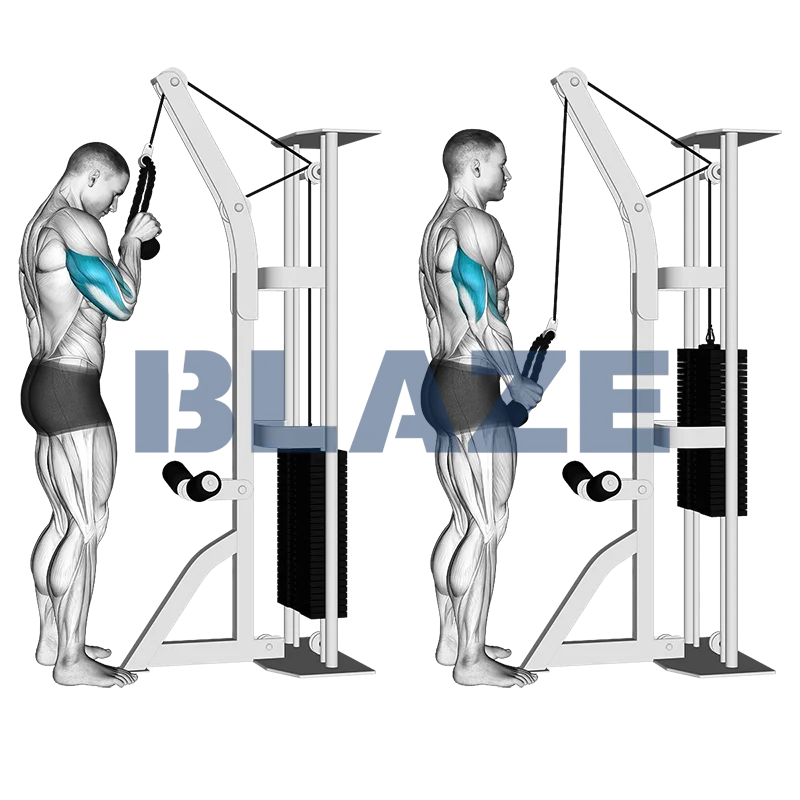
The cable triceps pushdown is a powerful exercise for enhancing upper-arm strength. This move primarily targets the triceps brachii, engaging all three heads for balanced development. Secondary muscles include the shoulders and core, providing stabilization. Athletes benefit from this exercise by improving arm strength and definition, aiding performance in sports that require powerful arm movements like basketball, tennis, and swimming. Enhanced triceps strength also contributes to better performance in chest and shoulder workouts, offering comprehensive upper-body conditioning.
Community Averages
27kg
Avg. weight
59lbs
Avg. weight
* Based on data from the Blaze community
Description
- 1Attach a rope to a high cable pulley. Grasp the rope with your palms facing each other. Lean forward and keep your elbows close to the sides of your body. This is your starting position.
- 2Exhale as you extend your elbows and push the rope downwards until your arms are almost fully extended. Twist your wrists at the end of the movement so that your palms are facing the floor as your arms are extended.
- 3Inhale as you reverse the movement and return to the starting position.
- 4You have completed your first repetition. Repeat the motion in a controlled way and count your reps.
Tips & Tricks
- •Maintain Proper Posture: Keep your back straight and core engaged throughout the exercise. Avoid leaning forward or backward as this can reduce the effectiveness and put unnecessary strain on your lower back.
- •Keep Elbows Close: Ensure that your elbows are tucked close to your sides throughout the movement. Flaring them out can transfer the focus away from your triceps and reduce the efficiency of the exercise.
- •Full Range of Motion: Extend your arms fully downwards, and let them return to about a 90-degree angle at the top of the movement. Don't let the weight stack touch down or rest between repetitions to keep constant tension on the muscles.
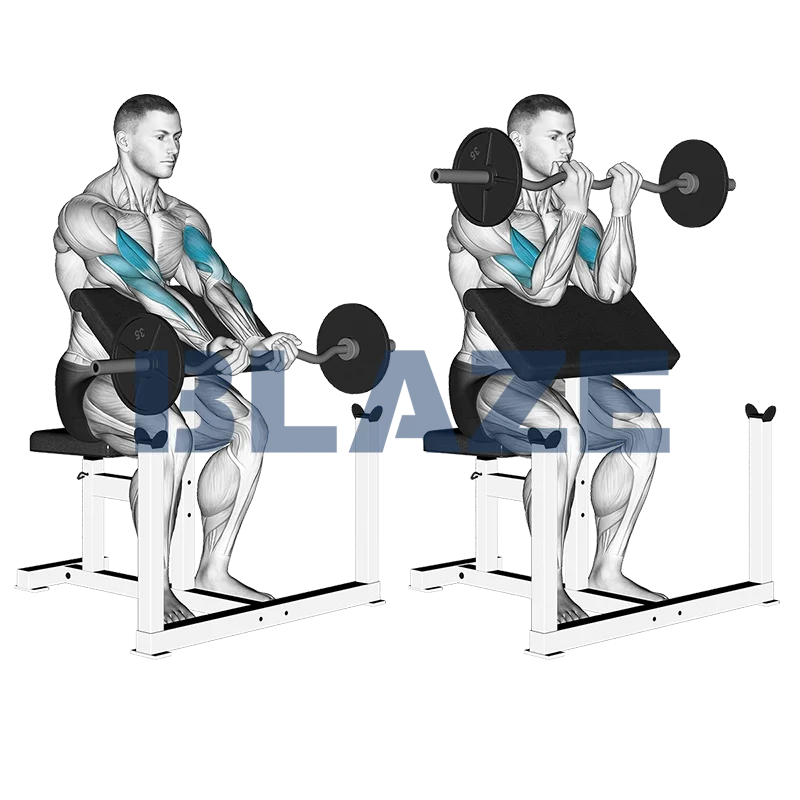
The EZ bar preacher curl is a prime bicep exercise that enhances muscle isolation, resulting in effective muscle growth and strength. This movement predominantly targets the biceps brachii, with secondary activation in the brachialis and brachioradialis. Athletes benefit from this curl due to its ability to reduce strain on the wrists and elbows, thanks to the EZ bar's ergonomic design. By isolating the biceps, it promotes balanced muscle development, crucial for improving overall arm strength and performance in various sports.
Community Averages
26kg
Avg. weight
56lbs
Avg. weight
* Based on data from the Blaze community
Description
- 1Position a loaded barbell on the rest of a preacher bench.
- 2Sit on the preacher bench and use a shoulder-width underhand (supinated) grip to lift the barbell off the rest.
- 3Rest the backs of your upper arms on the padded surface, with your elbows fully extended.
- 4Exhale as you curl the barbell upwards towards your shoulders.
- 5Hold the top position for a count of two and squeeze your biceps.
- 6Inhale as you slowly lower the barbell until your elbows are fully extended.
- 7Repeat the movement for the prescribed number of repetitions.
Tips & Tricks
- •Optimal Grip: When using the EZ bar, choose a grip that feels most natural for your wrists. The semi-pronated (angled) grip positions can reduce wrist strain compared to a straight bar.
- •Control the Movement: Focus on maintaining a slow and controlled movement throughout the exercise. Avoid using momentum to lift the bar, which can reduce effectiveness and increase injury risk.
- •Full Range of Motion: Ensure you work through a full range of motion. Lower the barbell until your elbows are almost fully extended for maximum stretch, and curl up until your biceps are fully contracted.
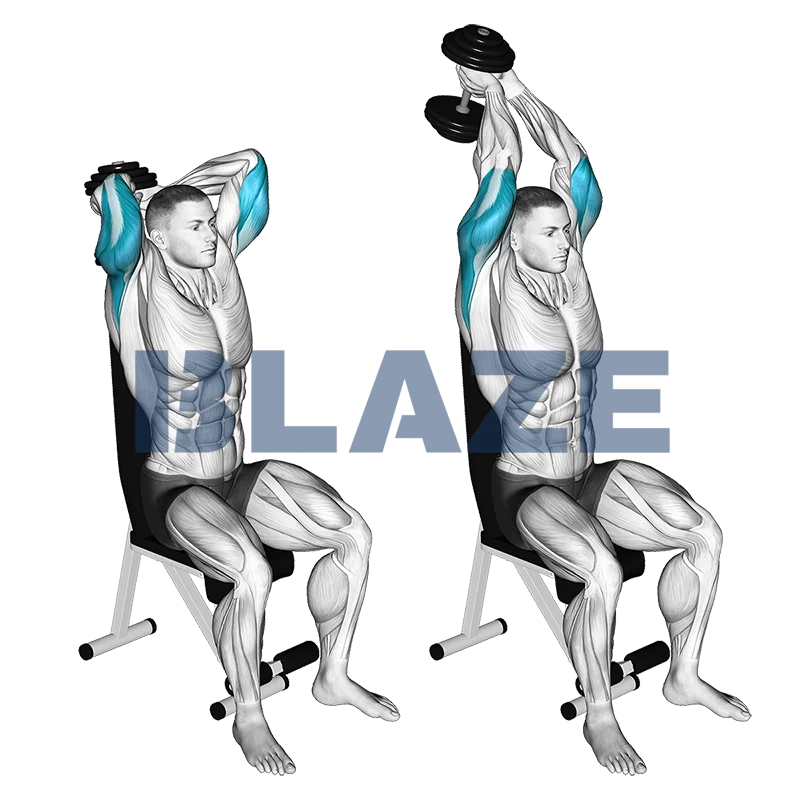
The one arm triceps extension with dumbbell is a fantastic isolation exercise targeting the triceps brachii. Key benefits include improved arm strength, enhanced muscle definition, and greater stability in the shoulder and elbow joints. By focusing on one arm at a time, it ensures muscular balance and symmetry, which is crucial for athletes to prevent injuries. This exercise especially activates the long head of the triceps, making it excellent for athletes looking to boost their performance in pushing movements and upper-body endurance.
Community Averages
14kg
Avg. weight
32lbs
Avg. weight
* Based on data from the Blaze community
Description
- 1Sit on a flat bench and rest the dumbbell on your thighs.
- 2Grasp the bar of the dumbbell with both hands, one hand over the other.
- 3Kick the dumbbell up with one knee and rest the dumbbell on your shoulder. Adjust your hand position. Your palms should be facing upwards.
- 4Raise the dumbbell above your head until your arms are almost fully extended.
- 5Inhale as you slowly lower the dumbbell until it touches your back.
- 6Exhale as you raise the dumbbell up to the starting position.
- 7You have completed your first repetition. Repeat the motion in a controlled way and count your reps.
Tips & Tricks
- •Choose the Right Weight: Always select a weight that challenges you but allows you to maintain proper form throughout the exercise. If you’re new to this exercise, start with a lighter weight to get used to the movement.
- •Maintain a Neutral Spine: Keep your back straight and avoid arching or rounding your spine. Sit on a bench with back support if needed to help maintain proper posture.
- •Grip and Hand Placement: Hold the dumbbell with both hands under the top weight plate. Ensure your palms are facing upward, and your thumbs are wrapped around the handle for a secure grip.
Start this workout in the Blaze app
Download Blaze Workout Tracker and follow this plan with guided sets and tracking.